Get a Free Quote

Our representative will contact you soon.
Email
Phone/WhatsApp
Name
Company Name
Message
0/1000

Why Eco-Friendly Take Away Boxes Are Transforming the Food Service Industry?

2026-05-11 13:21:00
Why Eco-Friendly Take Away Boxes Are Transforming the Food Service Industry?

The food service industry is undergoing one of its most significant shifts in decades, and at the center of this transformation are eco-friendly take away boxes. What was once a niche preference driven by a small segment of environmentally conscious consumers has rapidly evolved into a mainstream demand that is reshaping how restaurants, cafés, food trucks, and catering businesses operate on a daily basis. Operators who once viewed sustainable packaging as an optional upgrade are now recognizing it as a business necessity — one that influences customer loyalty, regulatory compliance, and long-term profitability.

Understanding why eco-friendly take away boxes are driving this transformation requires looking beyond surface-level environmental messaging. The real reasons are rooted in shifting consumer expectations, tightening government regulations, waste reduction economics, and the undeniable performance advantages that modern sustainable materials now offer. This article breaks down the core drivers of this transformation and explains why forward-thinking food service businesses are making the switch — and why those who have not yet done so may soon find themselves at a competitive disadvantage.

eco-friendly take away boxes

The Consumer Demand Driving the Shift

Changing Expectations Among Modern Diners

Today's food service consumers are more informed about environmental issues than any previous generation. Studies consistently show that a significant portion of diners consider a brand's environmental practices when choosing where to eat or order from. When customers receive their orders in eco-friendly take away boxes, it sends a clear signal about a business's values — and that signal matters. Packaging is no longer just a functional afterthought; it is part of the brand experience from the moment food leaves the kitchen to the moment it reaches the customer's table.

This shift in expectations is particularly pronounced among younger demographics. Millennials and Generation Z consumers, who represent an increasingly large share of food service spending, actively seek out businesses that align with their environmental values. For these customers, choosing a restaurant that uses eco-friendly take away boxes is a form of values-based purchasing — they are voting with their wallets for businesses that take sustainability seriously. Food operators who ignore this trend risk losing a growing segment of their customer base to competitors who are already meeting this expectation.

Social media has amplified this dynamic considerably. Customers photograph and share their food experiences online, and packaging is very much part of that visual narrative. Businesses that use clean, well-designed eco-friendly take away boxes benefit from organic brand promotion as customers post images of their sustainable packaging experiences. This creates a virtuous cycle where environmentally responsible choices also become powerful marketing tools.

The Rise of Conscious Corporate Purchasing

Beyond individual consumers, corporate catering clients and institutional buyers are increasingly prioritizing sustainability in their procurement decisions. Large organizations with environmental, social, and governance commitments are actively seeking food service partners who share those values. Using eco-friendly take away boxes can therefore open doors to B2B food service contracts that would otherwise be inaccessible to operators relying on conventional plastic or polystyrene packaging.

This corporate demand is not limited to large enterprises. Small and medium-sized businesses are equally subject to growing pressure from stakeholders, employees, and clients to demonstrate sustainable practices. When a catering company can credibly state that all of its packaging — including its eco-friendly take away boxes — is biodegradable or compostable, it becomes a meaningful differentiator in competitive bidding situations. Sustainability credentials are increasingly becoming table stakes in the food service B2B market.

Regulatory Pressure and Compliance Requirements

Government Bans on Single-Use Plastics

One of the most powerful forces compelling the food service industry to adopt eco-friendly take away boxes is government legislation. Countries and municipalities around the world have implemented or are in the process of implementing bans and restrictions on single-use plastic packaging. These regulations are not speculative — they are already affecting businesses operating in major markets across Europe, Asia, North America, and beyond. For food operators, compliance is not a choice; it is a legal obligation with real financial penalties for non-compliance.

The regulatory environment continues to tighten. What is permitted today may be prohibited within the next product lifecycle. Businesses that are proactive in switching to eco-friendly take away boxes now are building regulatory resilience into their supply chains. Those who delay face the risk of sudden, costly transitions forced upon them by legislative deadlines — a far more disruptive and expensive scenario than a planned, voluntary switch made in advance.

Extended Producer Responsibility schemes, which make producers and users of packaging financially responsible for its end-of-life management, are also expanding globally. For food service operators, this means that the choice of packaging material has direct cost implications. Eco-friendly take away boxes made from compostable or recyclable materials typically carry lower or zero liability under such schemes compared to conventional plastic containers, making them a financially prudent choice as well as an environmentally responsible one.

The Role of Industry Standards and Certification

Beyond direct legislation, industry standards and certification frameworks are establishing new benchmarks for sustainable packaging. Certifications that verify the compostability, recyclability, or recycled content of eco-friendly take away boxes are becoming important purchasing criteria for institutional buyers, retailers, and food aggregator platforms. Packaging suppliers and food operators who invest in certified sustainable materials gain credibility and trust that is difficult to achieve through claims alone.

Certification-backed eco-friendly take away boxes also protect businesses from greenwashing accusations — a reputational risk that has caught up with companies making unsubstantiated environmental claims. When packaging carries recognized third-party certification, it provides legal and reputational protection while giving customers and regulators confidence in the business's environmental commitments. This is increasingly important in a marketplace where scrutiny of sustainability claims is intensifying.

Material Innovation and Performance Advantages

Why Sugarcane-Based Packaging Is Leading the Transformation

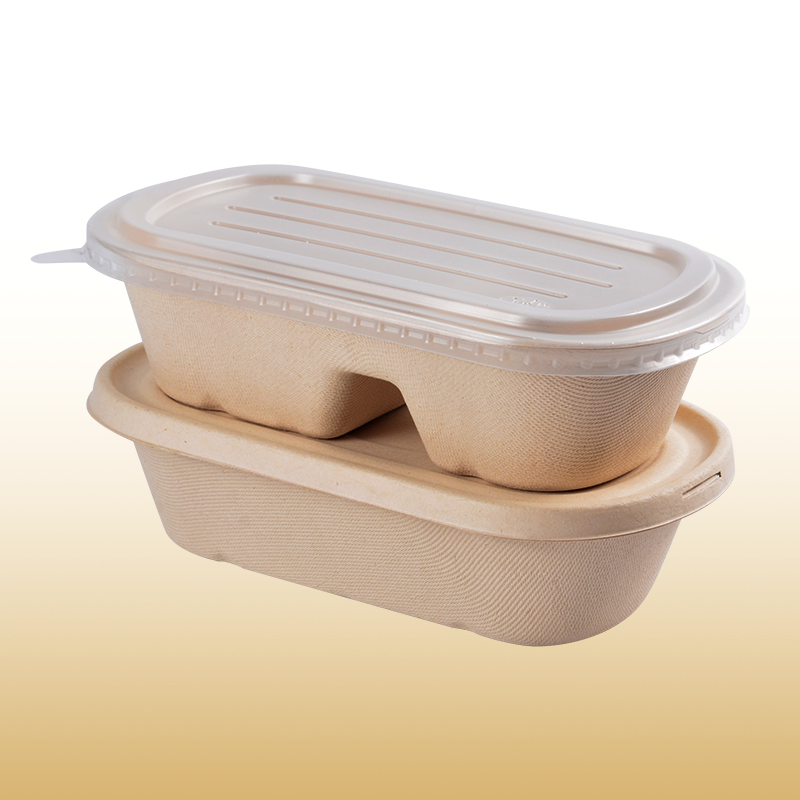
Among the many materials used to produce eco-friendly take away boxes, sugarcane bagasse has emerged as one of the most compelling alternatives to conventional plastic and polystyrene. Bagasse is the fibrous residue left after sugarcane juice extraction — a material that was once treated as agricultural waste but is now recognized as a high-performance, renewable packaging substrate. Boxes made from sugarcane bagasse are naturally sturdy, heat-resistant, and capable of holding both hot and cold food without compromising structural integrity.

The practical performance of sugarcane-based eco-friendly take away boxes addresses one of the most common objections to sustainable packaging: that it simply does not perform as well as plastic. In real-world food service conditions, high-quality sugarcane boxes hold up to soups, sauces, greasy foods, and steaming hot meals with impressive durability. They are microwave-safe and can be used in refrigeration, making them genuinely versatile across a wide range of food service applications. For operators exploring certified sustainable options, eco-friendly take away boxes made from sugarcane bagasse represent a highly practical starting point.

Beyond functionality, the environmental credentials of sugarcane bagasse are strong. It is derived from a rapidly renewable agricultural crop, requires no virgin tree pulp or petroleum-based inputs, and is fully compostable at end of life. When food service operators make the switch to sugarcane-based eco-friendly take away boxes, they are choosing a material whose environmental advantages are grounded in verifiable chemistry and lifecycle science — not just marketing language.

Compostability and the Circular Economy Opportunity

One of the transformative implications of eco-friendly take away boxes made from compostable materials is their compatibility with circular economy models in food service. When packaging and food waste can be co-composted rather than separated, waste management becomes simpler and more efficient. For food businesses operating in areas with commercial composting infrastructure, compostable take away boxes reduce landfill dependency and can even generate cost savings in waste disposal contracts compared to mixed plastic waste streams.

The circular economy benefits extend beyond individual businesses. When eco-friendly take away boxes are composted at scale, the resulting compost can return nutrients to agricultural land — including the sugarcane fields that produce the raw material for the next generation of packaging. This closed-loop potential is a genuinely compelling argument for the systemic transformation that sustainable packaging represents, and it illustrates why the shift to eco-friendly take away solutions is not merely a trend but a structural change in how food service waste is conceptualized and managed.

Business Economics of Sustainable Packaging

The True Cost Comparison

A common concern among food service operators considering the switch to eco-friendly take away boxes is cost. On a per-unit basis, sustainable packaging has historically carried a price premium over conventional plastic or polystyrene alternatives. However, this comparison becomes more nuanced when total cost of ownership is considered. Regulatory fines, waste disposal levies, carbon taxes, and reputational damage from non-compliance with sustainability expectations all represent real costs that erode the apparent savings of cheaper conventional packaging.

Furthermore, the economics of eco-friendly take away boxes have shifted considerably as production volumes have scaled up and manufacturing processes have matured. The cost gap between sustainable and conventional packaging has narrowed significantly in recent years, and in some markets, it has effectively closed when all relevant costs — including regulatory compliance costs — are factored in. Operators who evaluate packaging costs in isolation, without considering the full business context, may be making purchasing decisions based on an incomplete economic picture.

Brand Value and Revenue Implications

The revenue implications of using eco-friendly take away boxes deserve careful consideration alongside cost factors. Businesses that credibly communicate their use of sustainable packaging tend to attract more loyal customer bases, command modest price premiums, and generate stronger word-of-mouth referrals from environmentally motivated consumers. These revenue benefits may not always appear on a packaging cost line, but they are real contributors to overall business performance.

Staff morale and talent attraction are also relevant business considerations. Food service operators — particularly those competing for skilled culinary and management talent — find that a genuine commitment to sustainability, including the use of eco-friendly take away boxes, contributes to a positive employer brand. Employees who are proud of their employer's environmental stance tend to be more engaged and less likely to seek opportunities elsewhere. In a labor market where food service talent is frequently in short supply, this is a non-trivial business advantage.

Partnership and platform opportunities also expand for operators with credible sustainability credentials. Food delivery aggregators, corporate meal programs, and premium retail channels increasingly favor suppliers who can demonstrate responsible packaging practices. The adoption of eco-friendly take away boxes can therefore unlock commercial relationships and revenue streams that are unavailable to operators who have not made this transition.

food takeaway packaging (2).jpg

FAQ

What materials are commonly used to make eco-friendly take away boxes?

The most widely used materials for eco-friendly take away boxes include sugarcane bagasse, bamboo fiber, recycled paper, and PLA (polylactic acid) derived from plant starches. Among these, sugarcane bagasse is particularly popular in the food service industry because of its excellent heat resistance, structural strength, and fully compostable end-of-life profile. Each material has specific performance characteristics that make it suitable for different food types and temperature requirements, so operators typically select based on their specific menu and operational needs.

Are eco-friendly take away boxes suitable for hot and liquid foods?

Yes, high-quality eco-friendly take away boxes made from materials such as sugarcane bagasse are specifically designed to handle hot foods, oily dishes, and moist contents without structural failure or leakage. They are generally microwave-safe and can withstand food temperatures that are typical of commercial food service environments. However, performance varies between products and manufacturers, so it is important for operators to verify the specific thermal and moisture resistance ratings of the boxes they are considering before committing to a supplier.

How do eco-friendly take away boxes help with regulatory compliance?

Eco-friendly take away boxes made from compostable or recyclable materials help food service businesses comply with an expanding range of regulations targeting single-use plastics and non-recyclable packaging. Many jurisdictions have implemented or are phasing in bans on plastic food containers, and businesses using certified compostable alternatives are either exempt from these bans or in full compliance with them. Proactive adoption of sustainable packaging also helps operators prepare for future regulatory tightening, reducing the risk of costly and disruptive last-minute packaging transitions.

Do eco-friendly take away boxes cost significantly more than plastic alternatives?

The per-unit cost of eco-friendly take away boxes has decreased substantially as production has scaled globally, and the price gap with conventional plastic packaging has narrowed considerably. When total costs are considered — including regulatory compliance, waste disposal levies, and the brand value benefits of sustainable packaging — the true cost comparison often favors eco-friendly alternatives more than a simple per-unit price comparison would suggest. Many food service operators find that the business case for sustainable packaging is stronger than they initially expected once all relevant cost and revenue factors are assessed.