 EN
EN


Home > News > Industry News
The value of paper packaging for fresh produce goes beyond "reducing plastic"; it also includes material traceability, recyclable design, cold chain compatibility, and brand information presentation. For fruit, vegetable, berry, and mushroom brands planning to enter the European market, packaging upgrades should be based on the regulations of the target market and the actual needs of the product, rather than simply replacing all plastic packaging with the same type of paper material.
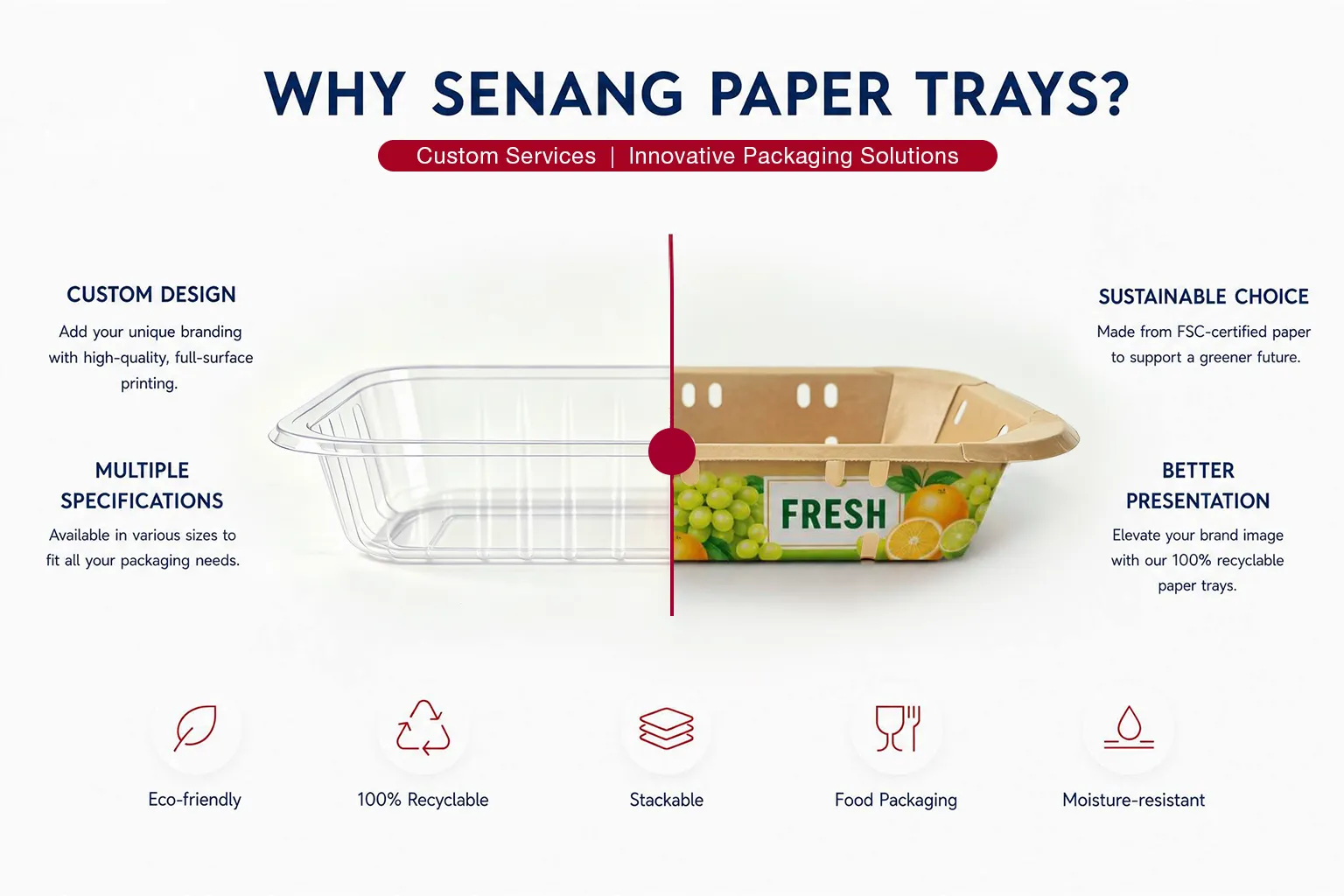
PPWR stands for the EU Packaging and Packaging Waste Regulation. This regulation focuses on requirements such as packaging reduction, recyclable design, material safety, recycling labels, and reuse.
According to the European Commission’s public page, PPWR came into effect on February 11, 2025, and generally applies to relevant packaging placed on the EU market starting from August 12, 2026. The European Commission also states that by 2030, packaging needs to be recyclable, and packaging design should allow materials to enter subsequent reuse or recycling stages after use.
This does not mean that “all paper boxes are naturally compliant,” nor does it mean that “all paper packaging can directly replace plastic.” Whether packaging meets the requirements also depends on the type of cardboard, coatings, adhesives, inks, sealing films, product contact safety, and the recycling system of the destination country.
For fresh produce brands, compliant design should be involved before sampling, rather than adding recycling information after the product is launched.
Paper-based packaging has received attention, on one hand due to regulations and brand goals for plastic reduction, and on the other hand because of existing recycling infrastructure and material characteristics.
Public data from the U.S. Environmental Protection Agency (EPA) show that the overall recycling rate for paper and cardboard in the United States was 68.2% in 2018. Among this, the recycling rate for corrugated boxes was 96.5%. It should be noted that these two figures correspond to different statistical categories—"overall paper and cardboard" and "corrugated boxes" respectively—and should not be directly interpreted as meaning that all paper-based fresh food packaging can achieve the same recycling rate.
In Europe, 4evergreen publicly reports the recycling rate of paper-based packaging as 87% and has set an industry target of 90% by 2030. 4evergreen also emphasizes that packaging design needs to be evaluated in combination with Design for Recycling (DfR) methods and actual recycling processes.
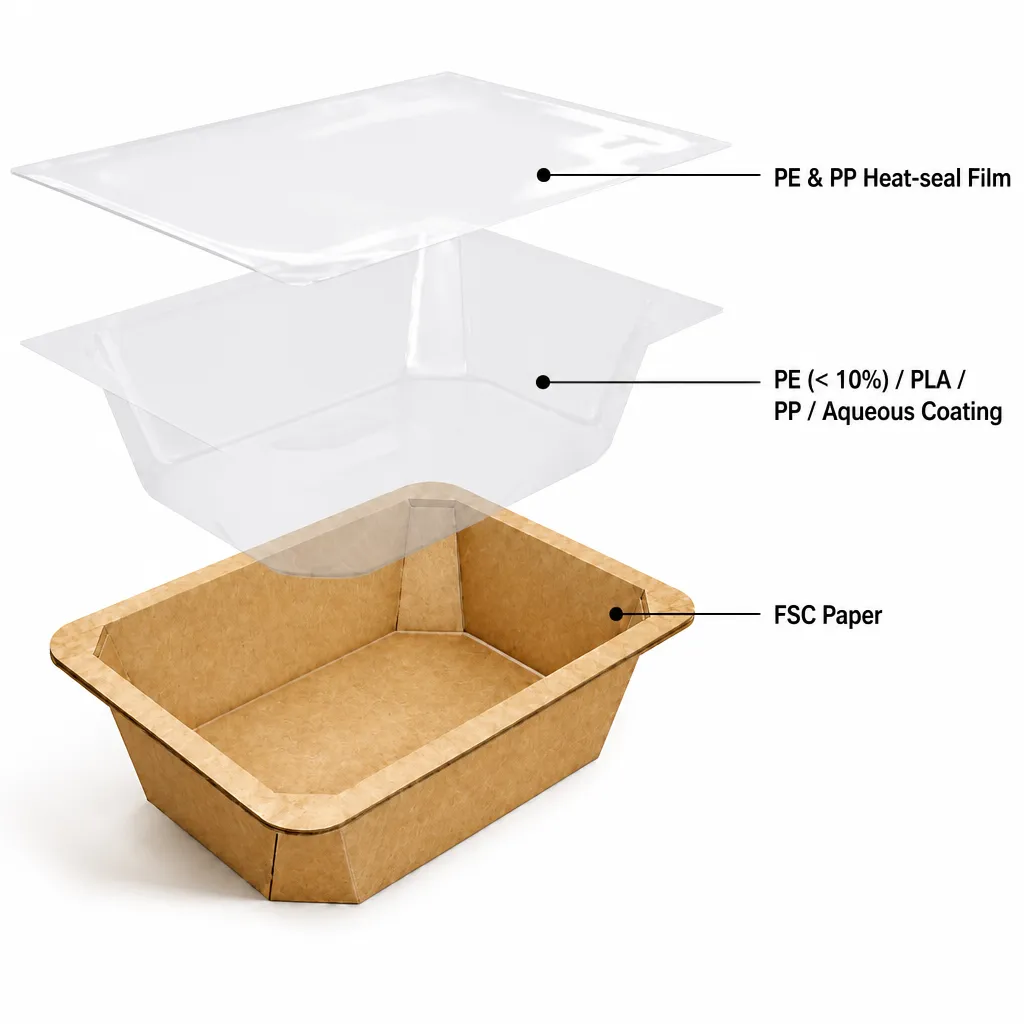
Therefore, the environmental performance of paper-based packaging should not be judged solely by the term "paper," but should also consider:
1. Whether the paper-based structure used is suitable for the target recycling system;
2. Whether coatings, adhesives, or sealing films affect sorting and repulping;
3. Whether the packaging is easily recognizable and correctly disposed of by consumers;
4. Whether the product’s location has the necessary collection, sorting, and reprocessing conditions.
Different paper materials serve different functions, and material selection should match product weight, moisture content, transportation method, and display scenarios. The following is a basic classification suitable for product development discussions, without presenting untested performance as fixed parameters.
1. Kraft Paper: Suitable for emphasizing natural texture and brand identity
Kraft paper typically has a natural brown or unbleached appearance, making it suitable for fruit boxes, berry boxes, handle boxes, and brand display packaging. Its advantages are more apparent in:
1) The natural color of the paper is suitable for visual expression of organic, farm-to-table, and sustainability themes;
2) Brands can be showcased through printing, including story, origin information, storage recommendations, and recycling instructions;
3) Product structures can incorporate window openings, handles, partitions, or ventilation holes;
4) Suitable for development in combination with other paperboards or functional materials.
However, if the packaging comes into contact with high-moisture fruits and vegetables, condensation, or fruit juice, separate tests must be conducted regarding moisture protection methods, coating composition, and recycling impact.
2. Corrugated Paper: Suitable for transportation protection and outer carton structures
Corrugated paper consists of flat paper and fluted paper, commonly used for outer cartons, shipping boxes, partition structures, and packaging that requires stacking protection. Its structural design can be adjusted according to product size, stacking methods, and transportation routes.
EPA public statistics show that in 2018, the recycling rate of corrugated boxes in the United States was 96.5%. This indicates that corrugated boxes have a relatively mature recycling base in the United States. However, this does not mean that all corrugated fresh produce trays or coated corrugated packaging can achieve a 96.5% recycling rate. Actual recycling performance still depends on packaging structure, contamination level, coating, and local recycling facilities.
The correct way to compare them is to evaluate the overall suitability of specific packaging solutions in terms of regulations, functionality, recycling, and supply chain.
Evaluation Dimensions |
Paper Packaging |
Plastic Packaging |
Regulations |
Whether it meets the recyclable design, material safety, and labeling requirements of the destination country |
Plastic type, recycled content requirements, single-use plastic restrictions, and EPR responsibilities |
Materials |
Kraft paper, corrugated paper, coated combinations |
PET, PP, PE, barrier layer combinations |
Moisture Resistance |
Strength retention under condensation, juice, and cold chain humidity |
Material barrier properties, condensation management, and recycling classification |
Structure |
Vents, dividers, folded edges, handles, stacking, and sealing |
Forming, snaps, heat sealing, and automation packaging line compatibility |
Recycling |
Whether the paper-based structure can enter the local paper recycling stream |
Whether it can be recognized and reprocessed by local sorting systems |
Brand Display |
Paper printing, colors, QR codes, and origin story |
Transparent display, labels, and surface printing methods |
The first step in packaging upgrading is not choosing a specific material, but establishing testing conditions for the product and supply chain.
Clarify usage scenarios
1. Record product types, single-box weight, refrigeration temperature, transportation time, stacking method, and sales channels.
Determine material combinations
2. Match between kraft paper, corrugated paper, and functional coatings according to load-bearing, moisture resistance, ventilation, printing, and sealing requirements.
Complete verification documents
3. Keep records of paper material sources, food contact compliance information, coating and adhesive details, structural test results, and recyclability assessment data for target markets.
Paper-based fresh food packaging is not a single-material solution; it is a system composed of paper materials, structure, coatings, sealing, and recycling design. The final choice should still be based on the product characteristics and actual test results.
For fresh food brands planning to enter the European market, evaluating packaging in advance according to the design and recycling directions of PPWR can help reduce subsequent adjustment costs and establish a clearer compliance documentation basis for new product launches.
If you are looking for packaging solutions for fruits, vegetables, or fresh meat, you can obtain corresponding paper material and structure recommendations based on product weight, moisture content, transportation method, and target market.

