The global beverage industry is undergoing a revolutionary transformation as environmental consciousness reshapes consumer preferences and regulatory landscapes. At the forefront of this change are biodegradable paper cups, which are rapidly becoming the preferred alternative to traditional plastic containers across coffee shops, restaurants, and food service establishments worldwide. This sustainable packaging solution addresses critical environmental concerns while maintaining the functionality and convenience that businesses and consumers demand.
The adoption of biodegradable paper cups represents more than just a packaging upgrade; it signifies a fundamental shift toward sustainable business practices that align with modern environmental standards. As governments worldwide implement stricter regulations on single-use plastics and consumers increasingly prioritize eco-friendly options, these innovative containers are positioning themselves as the cornerstone of responsible beverage service. The technology behind biodegradable paper cups has evolved significantly, incorporating advanced materials and manufacturing processes that ensure product integrity while accelerating decomposition in natural environments.

Environmental Impact and Sustainability Benefits
Reduced Carbon Footprint in Manufacturing
The production of biodegradable paper cups generates significantly lower carbon emissions compared to traditional plastic alternatives. Manufacturing facilities utilize renewable energy sources and implement energy-efficient processes that minimize environmental impact throughout the production cycle. The raw materials used in biodegradable paper cups primarily consist of sustainably sourced wood fibers from certified forests, ensuring responsible resource utilization that supports forest regeneration initiatives.
Modern manufacturing techniques for biodegradable paper cups incorporate water-based inks and adhesives that eliminate harmful chemical compounds typically found in conventional packaging. These production methods not only reduce toxic emissions but also create safer working environments for manufacturing personnel. The streamlined manufacturing process requires fewer processing steps, resulting in reduced energy consumption and lower overall environmental impact per unit produced.
Accelerated Decomposition Rates
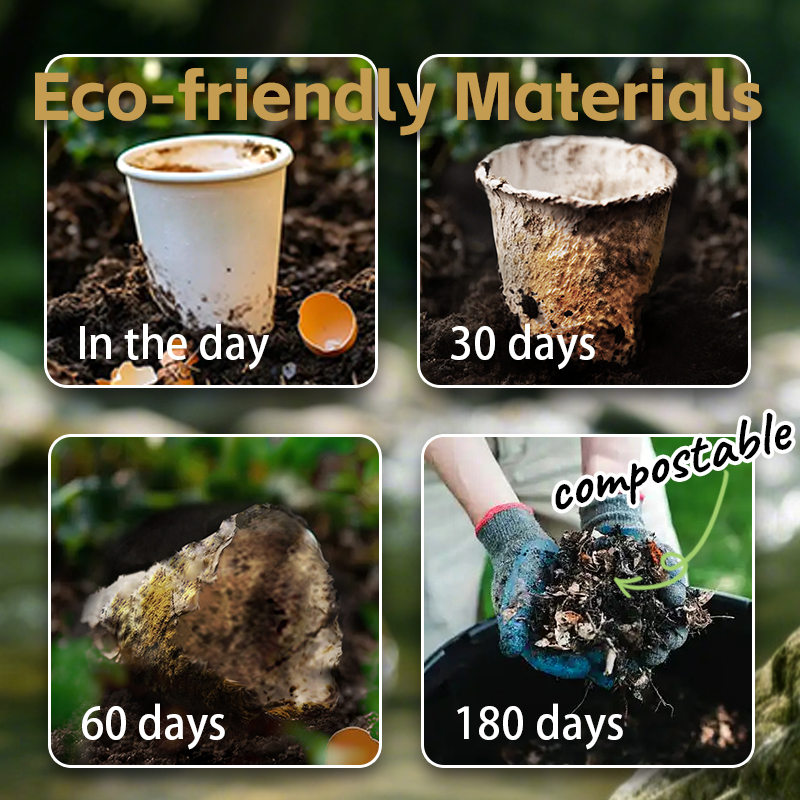
Unlike traditional plastic cups that can persist in landfills for hundreds of years, biodegradable paper cups decompose within 90 to 180 days under appropriate composting conditions. This rapid breakdown process is facilitated by specially engineered coatings that maintain structural integrity during use while readily dissolving when exposed to moisture and microbial activity in composting environments. The decomposition process enriches soil composition, creating valuable organic matter that supports plant growth.
Industrial composting facilities have demonstrated remarkable efficiency in processing biodegradable paper cups, with some facilities achieving complete decomposition within 60 days under optimal temperature and humidity conditions. Home composting systems can also effectively process these containers, though decomposition may take longer depending on environmental factors such as temperature fluctuations and moisture levels. The versatility of disposal options makes biodegradable paper cups particularly attractive to environmentally conscious consumers and businesses seeking comprehensive waste management solutions.
Market Dynamics and Industry Adoption
Consumer Demand Driving Market Growth
Consumer awareness of environmental issues has reached unprecedented levels, with surveys indicating that over 70% of beverage consumers actively seek establishments that utilize sustainable packaging options. This consumer preference has created substantial market demand for biodegradable paper cups, prompting major coffee chains and food service providers to transition from traditional packaging materials. The willingness of consumers to pay premium prices for environmentally responsible products has strengthened the economic viability of biodegradable alternatives.
Social media campaigns and environmental advocacy groups have amplified consumer awareness of packaging waste impacts, creating powerful market forces that favor biodegradable paper cups over conventional alternatives. Younger demographics, particularly millennials and Generation Z consumers, demonstrate particularly strong preferences for sustainable packaging options, often choosing establishments based on their environmental policies. This demographic shift represents a long-term market trend that continues to drive industry-wide adoption of biodegradable packaging solutions.
Corporate Sustainability Initiatives
Major beverage companies have integrated biodegradable paper cups into comprehensive sustainability initiatives that align with corporate social responsibility objectives and stakeholder expectations. These initiatives often include ambitious targets for waste reduction, carbon emission reductions, and sustainable sourcing practices that position biodegradable packaging as a critical component of broader environmental strategies. Corporate adoption has accelerated market development by creating substantial demand volumes that support manufacturing scale economies.
Leading food service chains have established partnerships with biodegradable paper cup manufacturers to develop customized solutions that meet specific operational requirements while maintaining brand consistency. These collaborative relationships have resulted in innovative product designs that optimize functionality, aesthetic appeal, and environmental performance. The corporate commitment to biodegradable paper cups has also influenced supply chain partners and franchise operators to adopt sustainable packaging practices across entire distribution networks.
Technological Innovations and Product Development
Advanced Coating Technologies
Revolutionary coating technologies have transformed the performance characteristics of biodegradable paper cups, enabling them to match or exceed the functionality of traditional plastic containers while maintaining rapid decomposition properties. Plant-based polymer coatings derived from corn starch and other renewable materials provide excellent moisture barriers that prevent leakage and maintain structural integrity throughout typical usage periods. These coatings undergo extensive testing to ensure optimal balance between performance and biodegradability.
Nanotechnology applications have enabled the development of ultra-thin coatings that minimize material usage while maximizing protective properties. These advanced coatings incorporate antimicrobial properties that enhance food safety while maintaining compatibility with composting processes. The precision application of these coatings ensures consistent product quality and performance across large-scale production runs, supporting the reliability requirements of high-volume food service operations.
Enhanced Structural Engineering
Engineering innovations have optimized the structural design of biodegradable paper cups to provide superior strength and durability without compromising environmental benefits. Advanced fiber orientation techniques create cup walls that resist deformation under temperature stress while maintaining lightweight characteristics that reduce shipping costs and storage requirements. These structural improvements have expanded the application range of biodegradable paper cups to include hot beverages, cold drinks, and frozen dessert applications.
Computer-aided design tools have enabled manufacturers to optimize cup geometry for maximum strength-to-weight ratios while minimizing material consumption. The integration of reinforcement features such as strategically placed ridges and optimized wall thickness variations provides enhanced grip comfort and thermal insulation properties. These design enhancements have resulted in biodegradable paper cups that deliver superior user experiences while maintaining environmental advantages over traditional alternatives.
Regulatory Framework and Compliance Standards
International Environmental Regulations
Governments worldwide have implemented comprehensive regulations targeting single-use plastic reduction, creating favorable regulatory environments for biodegradable paper cups adoption. European Union directives have established specific timelines for plastic packaging phase-outs while providing incentives for businesses transitioning to biodegradable alternatives. These regulatory frameworks have created predictable market conditions that encourage investment in biodegradable packaging infrastructure and technology development.
Regional regulations vary in scope and implementation timelines, but the overall trend toward stricter environmental standards continues to accelerate globally. Many jurisdictions have implemented extended producer responsibility programs that assign disposal costs to packaging manufacturers, creating economic incentives for developing biodegradable alternatives. The regulatory momentum supporting biodegradable paper cups has attracted significant investment from packaging manufacturers seeking to capitalize on expanding market opportunities.
Certification and Quality Standards
Industry certification programs have established rigorous standards for biodegradable paper cups that ensure product performance and environmental claims meet scientific validation requirements. Organizations such as the Biodegradable Products Institute and ASTM International have developed comprehensive testing protocols that evaluate decomposition rates, compostability, and material safety under various environmental conditions. These certification programs provide consumer confidence and enable businesses to substantiate environmental marketing claims.
Quality management systems specific to biodegradable paper cups have evolved to address unique manufacturing requirements and performance characteristics. These systems incorporate specialized testing procedures that monitor coating integrity, structural durability, and decomposition properties throughout production processes. Compliance with international quality standards ensures that biodegradable paper cups meet safety requirements for food contact applications while maintaining consistent environmental performance across different manufacturing facilities.
Economic Considerations and Market Dynamics
Cost-Benefit Analysis for Businesses
The economic equation for biodegradable paper cups has improved significantly as manufacturing scales have expanded and production efficiencies have increased. Initial cost premiums compared to traditional plastic cups have decreased substantially, with many applications achieving cost parity when considering total lifecycle costs including disposal fees and regulatory compliance expenses. Businesses increasingly recognize that the long-term economic benefits of biodegradable paper cups extend beyond direct procurement costs to include brand value enhancement and risk mitigation.
Waste management cost savings represent a significant economic advantage for establishments utilizing biodegradable paper cups, particularly in jurisdictions with high landfill fees or mandatory composting programs. The ability to process biodegradable containers through organic waste streams often results in lower disposal costs compared to traditional waste management approaches. Additionally, reduced regulatory compliance costs and potential tax incentives for sustainable packaging adoption contribute to favorable economic outcomes for businesses investing in biodegradable alternatives.
Supply Chain Optimization
Supply chain efficiencies have emerged as a critical factor in the economic viability of biodegradable paper cups, with manufacturers developing specialized logistics networks that optimize inventory management and delivery schedules. Strategic distribution centers located near major metropolitan areas reduce transportation costs while ensuring reliable product availability for high-volume customers. The development of regional manufacturing facilities has further enhanced supply chain efficiency while reducing carbon emissions associated with long-distance shipping.
Collaborative partnerships between manufacturers and distributors have resulted in innovative inventory management systems that minimize waste while ensuring product freshness and quality. These partnerships often include customized packaging solutions that reduce storage space requirements and simplify handling procedures for end-users. The optimization of supply chain operations has contributed significantly to the overall cost competitiveness of biodegradable paper cups while supporting market expansion into previously underserved geographic regions.
Future Trends and Market Projections
Innovation Pipeline and Emerging Technologies
The research and development pipeline for biodegradable paper cups includes breakthrough technologies that promise to further enhance performance characteristics while reducing environmental impact. Advanced bio-based materials derived from agricultural waste streams offer potential cost reductions while expanding the renewable resource base for manufacturing operations. These emerging technologies incorporate circular economy principles that minimize waste generation throughout the entire product lifecycle.
Artificial intelligence applications in manufacturing processes are enabling unprecedented precision in coating application and quality control, resulting in more consistent product performance and reduced material waste. Smart manufacturing systems continuously optimize production parameters to maximize efficiency while minimizing energy consumption and environmental impact. These technological advances position biodegradable paper cups at the forefront of sustainable packaging innovation while supporting continued market growth and adoption.
Market Expansion Opportunities
Global market projections indicate substantial growth opportunities for biodegradable paper cups across diverse geographic regions and application segments. Emerging markets in Asia and Latin America present significant expansion potential as economic development increases consumer spending on packaged beverages while environmental awareness continues to grow. The expansion of modern retail formats and food service establishments in these regions creates substantial demand potential for sustainable packaging solutions.
Specialized market segments including healthcare facilities, educational institutions, and corporate catering services represent untapped opportunities for biodegradable paper cups adoption. These segments often have specific requirements for hygiene, safety, and environmental responsibility that align well with the characteristics of biodegradable packaging solutions. The development of customized products for these specialized applications offers manufacturers opportunities to differentiate their offerings while serving growing market demand for sustainable alternatives.
FAQ
How long do biodegradable paper cups take to decompose completely
Biodegradable paper cups typically decompose within 90 to 180 days under proper composting conditions, though this timeframe can vary depending on environmental factors such as temperature, moisture levels, and microbial activity. In industrial composting facilities with controlled conditions, complete decomposition often occurs within 60 to 90 days. Home composting systems may require longer periods, typically 4 to 6 months, depending on maintenance and environmental conditions. The specialized coatings used on modern biodegradable paper cups are designed to break down rapidly once exposed to composting environments while maintaining structural integrity during normal use.
Are biodegradable paper cups suitable for both hot and cold beverages
Yes, modern biodegradable paper cups are engineered to handle both hot and cold beverages effectively. Advanced coating technologies and structural design improvements enable these cups to maintain integrity when exposed to hot liquids up to 200°F while preventing condensation issues with cold beverages. The plant-based polymer coatings provide excellent moisture barriers that prevent leakage regardless of beverage temperature. Different cup designs are optimized for specific temperature ranges, with specialized products available for extremely hot applications such as freshly brewed coffee or for frozen beverages that require enhanced insulation properties.
What is the cost difference between biodegradable paper cups and traditional plastic cups
The cost premium for biodegradable paper cups compared to traditional plastic cups has decreased significantly in recent years, with current price differences typically ranging from 10% to 30% depending on volume, specifications, and supplier relationships. When considering total lifecycle costs including disposal fees, regulatory compliance, and potential tax incentives for sustainable packaging, many businesses achieve cost parity or savings with biodegradable alternatives. Large-volume purchasers often negotiate favorable pricing that approaches traditional cup costs, while the brand value and customer preference benefits provide additional economic justification for the investment in sustainable packaging.
Can biodegradable paper cups be recycled through standard paper recycling programs
Biodegradable paper cups cannot typically be processed through standard paper recycling programs due to their specialized coatings, even though these coatings are designed to be environmentally friendly. The optimal disposal method for biodegradable paper cups is through industrial composting facilities or properly maintained home composting systems where they can decompose naturally. Some municipalities have developed specialized collection programs for compostable packaging materials that direct these products to appropriate processing facilities. Businesses and consumers should check local waste management guidelines to determine the best disposal method for biodegradable paper cups in their specific area.
Table of Contents
- Environmental Impact and Sustainability Benefits
- Market Dynamics and Industry Adoption
- Technological Innovations and Product Development
- Regulatory Framework and Compliance Standards
- Economic Considerations and Market Dynamics
- Future Trends and Market Projections
-
FAQ
- How long do biodegradable paper cups take to decompose completely
- Are biodegradable paper cups suitable for both hot and cold beverages
- What is the cost difference between biodegradable paper cups and traditional plastic cups
- Can biodegradable paper cups be recycled through standard paper recycling programs