 EN

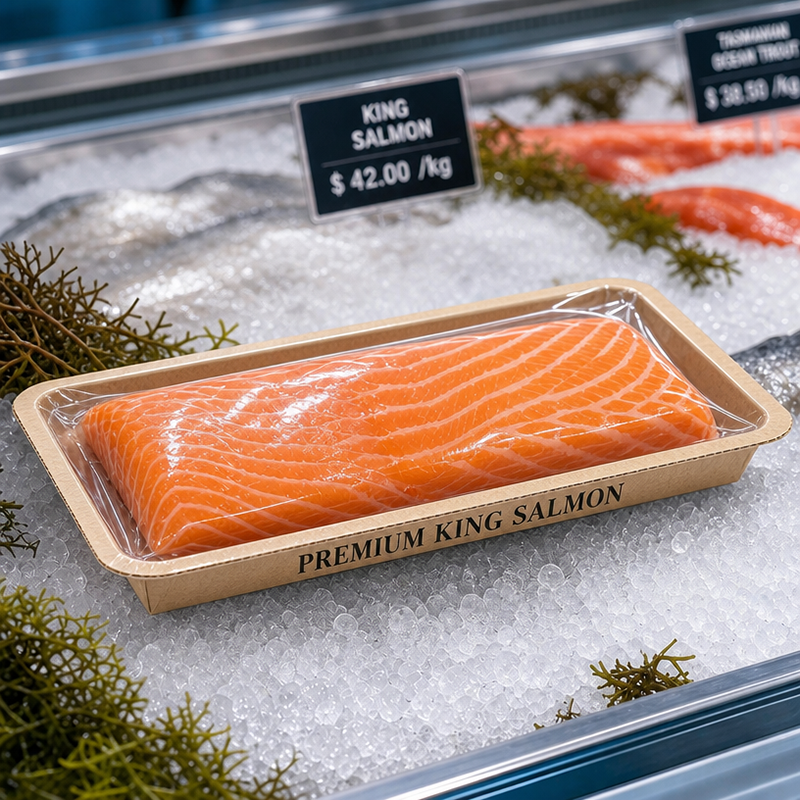
Vacuum Skin Packaging (VSP) is a popular packaging format for premium fresh-cut food. Many meat processors and supermarket brands adopt VSP skin-pack trays paired with dedicated skin-pack films for product lock-in freshness and retail display. Different from modified-atmosphere gas replacement, VSP packaging uses vacuum negative pressure to pull heated film tightly against food surfaces, creating physical barrier protection. It fully shows the original texture and color of food to boost retail premium value.
1. Working Principle of VSP Vacuum Skin Packaging
A complete VSP packaging system consists of paper-based VSP tray and special high-elongation skin-pack film. Food is placed on the tray. The equipment applies vacuum to pull film closely onto food contours. Tight contact between film, product and tray forms physical isolation, with no mixed protective gas filled inside the package.
Under refrigerated condition at 4°C, VSP-packed goods achieve around 7-day shelf-life. It is ideal for premium chilled meat such as steaks, thinly-sliced beef & mutton, and seafood. As an eco-friendly alternative to plastic trays, paper-based skin-pack trays replace conventional plastic substrates with paperboard, balancing premium display and sustainability demands.
2. Application Scenarios for Paper-Based VSP Trays
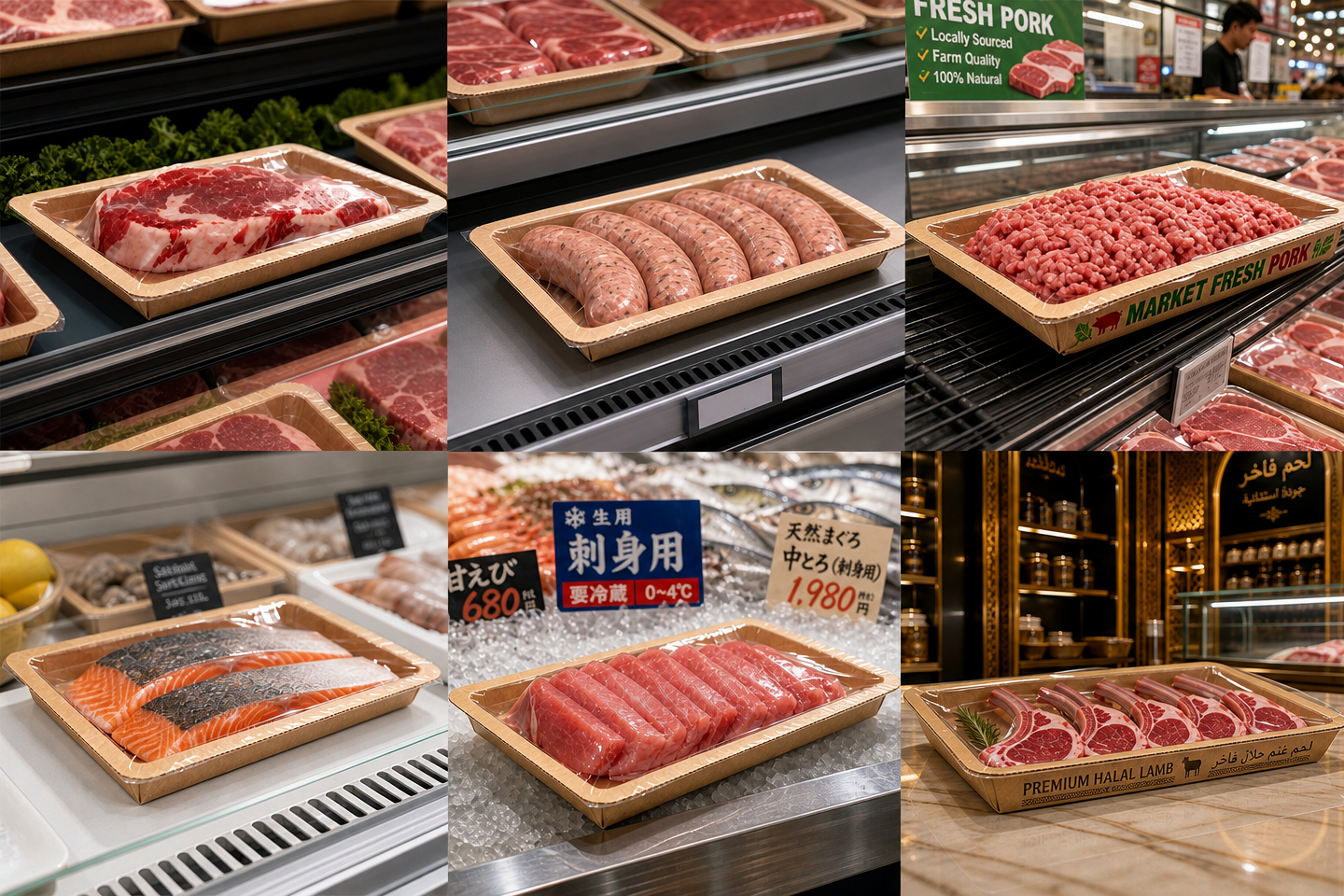
Paper-based VSP skin-pack trays feature relatively shallow depth, targeting premium retail channels:
* Premium raw-cut steaks, thinly-sliced chilled red meat
* Premium fillets, shellfish and frozen seafood
* Air‑dried cured meat and premium ready‑to‑eat deli meats
3. Key Selection Criteria for Paper-Based VSP Trays
Plastic vs Paper-Based Trays
Traditional VSP mostly uses plastic trays. Paper-based VSP trays serve as sustainable replacement. Paperboard supports direct printing for brand logos and traceability information to satisfy corporate plastic-reduction goals. Certain structures allow separation of film from paper substrate to comply with regional environmental regulations.
Equipment Compatibility
When switching to paper-based VSP trays, verify parameters of existing skin-pack machinery: tray depth, positioning mould, vacuum setting and matching skin-film. Always run sample machine trials to confirm proper skin conforming without virtual sealing or leakage.
End-of-Life & Recycling
Paper-based VSP trays fall into integrated coating structure and peelable film-laminated structure.
(1) Integrated coating type: for short-shelf-life articles; cannot achieve full air isolation.
(2) Peelable film-laminated type: for long-term storage & frozen goods, zero air ingress. Barrier film can be peeled off from paper substrate for separate sorting & recycling.
Integrated coating trays cannot be delaminated; follow local waste classification rules. For export projects, investigate target-market regulations in advance.
4. VSP vs MAP: Quick Decision-Making Guide
Choose VSP Vacuum Skin Packaging: For premium steaks & thinly-sliced meat; priority on visual presentation & retail premium; required chilled shelf-life approx. 7-days.
Choose MAP Modified Atmosphere Packaging: For large-scale industrial production; required chilled shelf-life of 10-14-days; covering fresh meat, seafood and ready-to-cook meals.
5. Project Support We Provide
* Recommend suitable paper-based VSP tray structure according to product weight and machine model
* Supply physical samples for production-line trial run to validate vacuum skin-pack performance
* Support custom dimensions & custom printing
* Provide food-contact material documentation and recycling instructions to support export compliance
If you are evaluating VSP skin-pack or MAP modified-atmosphere paper-based trays, please contact us for samples and quotations. Visit our product page for full details of paper-based MAP & VSP trays.