 EN
EN

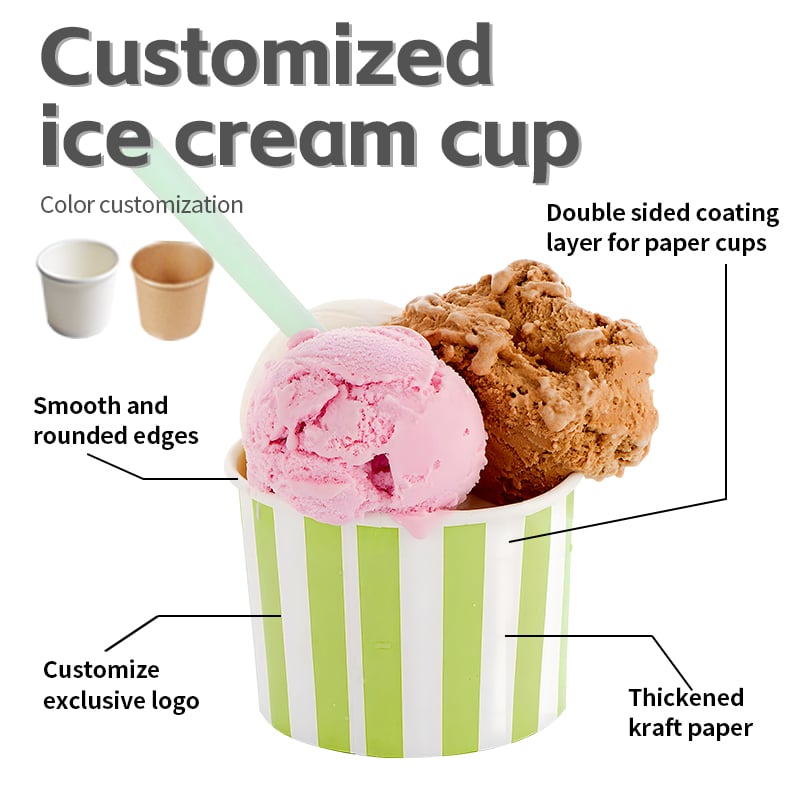
A wholesaler does not buy packaging; it buys the ability to keep a promise to someone else's customer. When an ice cream cup leaks in a freezer or the lids from a new batch will not seat, the complaint lands on the distributor, not on the factory. That is why supplier selection should be judged on the failures you can prevent, not on the price per thousand.
This guide separates a manufacturer from a trader, sets out the tests worth running before the first container, and covers the commercial terms that decide whether a programme stays profitable in peak season.
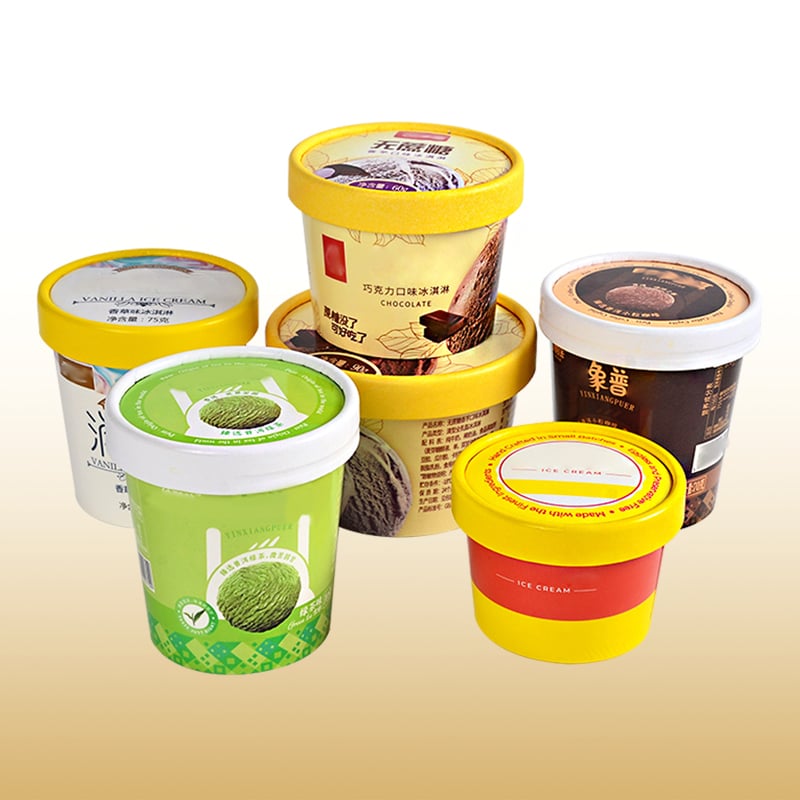
Manufacturer or Trader: Who Makes the Ice Cream Cup?
Who Actually Forms the Cup
The first question is not about quality but about ownership: does the supplier run its own forming lines, or buy finished cups and resell them? A trader can quote quickly and still deliver well, but it cannot control tolerance, adjust a mould or protect your allocation in a shortage. When a defect appears, a trader negotiates with a third party while your stock sits in a warehouse.
An ice cream cup programme that will run for years needs a supplier who can change something when the market changes: a new size, a heavier wall, a different lid fit. That capability lives with the manufacturer, and it is worth a small premium, because it is also what keeps specifications consistent across repeat orders.
Mould Range and the Size Ladder
Ask how many ice cream cup moulds the supplier holds and which sizes they cover. That range is what lets a wholesaler serve several channels from one relationship: convenience retail, dessert chains and foodservice all want different fills, and a narrow range forces you to split the business.
Lids follow the same logic, because an ice cream cup is only half a system. Confirm that every size you intend to stock has a matching lid in the same specification, and that the spoon and carton configuration exist as a complete set before the size goes into your catalogue. A lid that does not seat turns a good cup into a complaint at the counter.
Quality You Can Verify
Barrier, Leak and Cold Performance
Ice cream is a cold, wet, fatty product, so the barrier does most of the work. A PE-coated cup holds up through freezing and thawing; a thinner coating softens at the base and lets the wall absorb moisture until the cup loses shape in the customer's hand. Ask for the coating weight and the tested holding conditions, not the word "waterproof".
Then test it the way it will be used. Fill the cup with product at serving temperature, hold it at freezer conditions, and let it stand at room temperature for the length of a typical consumption. Record the result per specification, so the next purchasing decision rests on a repeatable number rather than on how the sample felt on the day.
Batch Consistency and Tolerances
Samples prove capability; batches prove discipline. Inconsistent wall thickness shows up as stacking failures, uneven filling and lids that fit one carton but not the next. Ask what tolerances are held on rim diameter, height and wall, and how often those are measured during a run.
Traceability is the practical test of that discipline. If a defect appears, batch marking on the carton plus inspection records should let the supplier isolate the affected production instead of recalling a season of stock. A manufacturer that cannot connect a shipment to a batch is not a manufacturer you can audit.
Compliance Paperwork
Food Contact Documentation
Every market asks something slightly different of an ice cream cup, so the useful question is not "are you certified" but "which document covers this exact cup". Food contact compliance, migration testing and ink declarations should name the board, coating and ink used on the SKU you are buying. A general paper certificate proves nothing about a printed, coated ice cream cup.
Quality systems such as ISO 9001 or BRC support the consistency argument for an ice cream cup, and retail buyers increasingly ask for them. Request scope and expiry date, keep copies with the SKU file, and re-check them when a product is sold into a new market.
Sustainability Claims That Survive Scrutiny
If the ice cream cup will be sold as recyclable or compostable, the claim has to match the construction. A plastic-lined cup is not compostable in most systems, and a heavily printed cup may not be accepted by paper recyclers. Certification is only useful when it covers the finished product and is recognised in the destination market.
Wholesalers who can offer a credible fibre-based option win business from retail buyers facing packaging rules. An unsupported claim does the opposite: it transfers the compliance risk straight to the distributor.
Commercial Terms
MOQ, Tooling and Print Setup
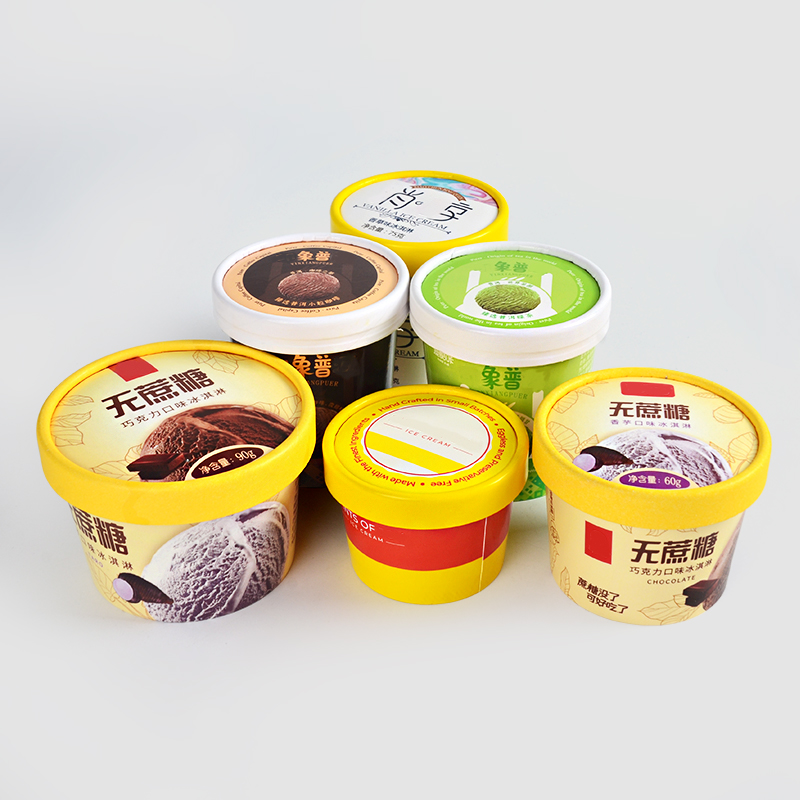
MOQ is really a question about setup. A stock ice cream cup in an existing mould has almost no tooling attached; a custom size or a bespoke print run carries plates and a minimum economic quantity. Ask which line items are one-off and which repeat, because a low unit price with a large hidden setup is not a low price.
Print method drives this further. Flexo suits long runs, offset gives finer colour, and digital makes short runs viable without plates. Compare quotations only when the print coverage, material specification and quantity are identical: otherwise the cheaper number is simply a different product.
Lead Time, Peak Season and OTIF
Ice cream cup orders are seasonal, and they tend to arrive late. Ask for the lead time on a repeat order separately from the first one, then ask what allocation looks like in the busiest month. A factory running eight cup forming machines and a dozen bowl machines at a daily output measured in the hundreds of thousands of pieces can absorb a spike; a small converter cannot. Confirm the capacity reserved for your order rather than the factory's total output.
On-time-in-full delivery of an ice cream cup order is worth asking for as data rather than as a promise. Historical OTIF plus a named contact for escalations tells you more about reliability than any brochure.
| Check | What a good answer looks like |
|---|---|
| Owns forming lines | Can adjust mould and wall thickness in-house |
| Size ladder and lids | Every stocked size has a matching lid |
| Food contact scope | Document names the SKU, board, coating and ink |
| Repeat lead time | Quoted separately from the first order |
| Batch traceability | Carton marking links to production records |
The Working Relationship
Technical Support and Escalation
Good suppliers answer design questions before the artwork is approved: whether a size will run on a customer's filling line, whether a lid change affects stack height, whether a coating will survive a blast freezer. That advice is worth more than a discount, because it prevents rework the wholesaler pays for twice.
Test the relationship during sampling. Response speed, willingness to explain a specification and clarity about what is included all predict how a supplier behaves when a shipment is short or a colour drifts. Any agreed change should be written into the specification before mass production starts, so both sides are approving the same product.
A high-quality ice cream cup supplier is ultimately judged on three things: whether the product behaves in the freezer, whether the paperwork survives an audit, and whether the allocation holds in July. Everything else is negotiable.
FAQ
What matters most when choosing an ice cream cup supplier?
Whether they actually form the cup, and whether they can prove batch consistency. Price follows those two, because an inconsistent supplier costs more in complaints, remakes and lost accounts than it saves on the invoice.
How can a wholesaler verify food safety compliance?
Ask for food contact documentation that names the exact board, coating and ink, plus ISO 9001 or BRC certification. Check the scope and expiry date, and confirm the tested construction matches the SKU you are ordering.
What MOQ should a wholesaler expect for custom cups?
It depends on whether the size already exists and how the ice cream cup is printed. Stock sizes need little setup; a new mould or a bespoke print run needs a minimum economic quantity. Ask for the setup charges separately so the MOQ makes sense.
How should quality disputes be handled?
Agree acceptance criteria, a sampling plan and credit terms before the first order. Photograph defects with carton and batch references, and route the claim through a named contact. Suppliers with traceability can isolate the batch; suppliers without it can only negotiate.