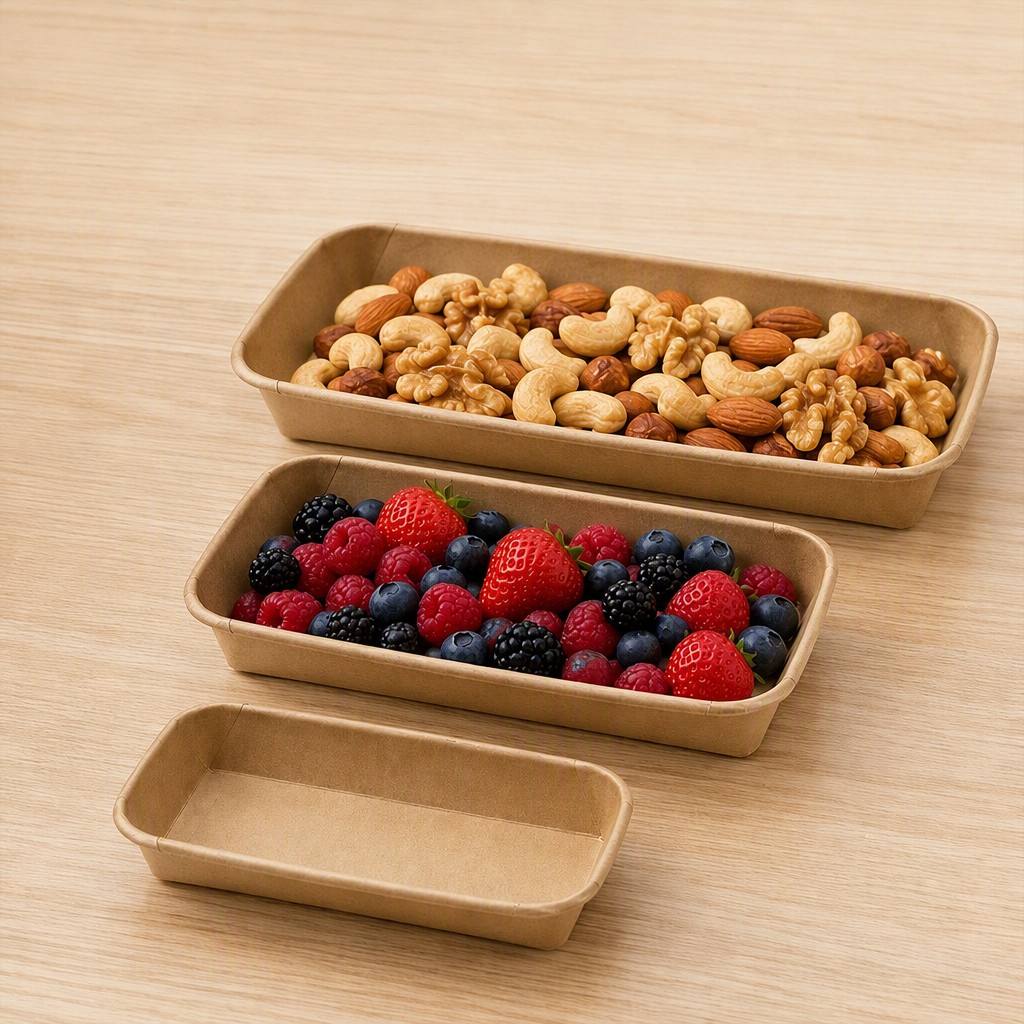
The choice between paper trays and plastic trays represents a critical decision for businesses across food service, retail, and packaging industries. While plastic has long dominated the market due to its perceived durability and cost-effectiveness, paper trays are increasingly recognized for their superior environmental benefits, enhanced food safety properties, and growing consumer appeal. Understanding the specific advantages of paper trays over their plastic counterparts enables businesses to make informed decisions that align with sustainability goals, regulatory requirements, and customer preferences.
Modern paper trays offer compelling advantages that extend far beyond environmental considerations. These benefits encompass operational efficiency, regulatory compliance, consumer perception, and long-term cost implications. By examining each advantage systematically, businesses can evaluate how paper trays might enhance their operations while supporting broader corporate responsibility initiatives and market positioning strategies.

Environmental and Sustainability Benefits
Biodegradability and Waste Reduction
Paper trays offer superior environmental performance through their natural biodegradability, breaking down completely within months when properly composted. Unlike plastic trays that persist in landfills for decades, paper trays decompose into harmless organic matter that enriches soil. This characteristic significantly reduces the environmental footprint of packaging operations and aligns with circular economy principles.
The biodegradable nature of paper trays contributes directly to waste stream reduction in commercial and institutional settings. Food service operations utilizing paper trays can often integrate them into existing composting programs, eliminating the need for separate waste sorting and disposal procedures. This integration simplifies waste management protocols while reducing overall disposal costs.
Commercial composting facilities readily accept paper trays as feedstock, unlike plastic alternatives that require specialized recycling processes with limited availability. The widespread acceptance of paper materials in composting systems ensures consistent disposal options regardless of geographic location or facility capabilities.
Renewable Resource Utilization
Paper trays utilize renewable forest resources managed through sustainable forestry practices, contrasting sharply with plastic trays derived from finite petroleum resources. Responsibly sourced paper trays support forest management cycles that sequester carbon dioxide while providing ongoing raw material supplies for future production needs.
The renewable nature of paper materials ensures long-term supply security without depleting non-renewable resources. Forest certification programs guarantee that paper tray production supports responsible land management practices that maintain ecosystem health and biodiversity. This sustainability foundation provides businesses with confidence in their long-term sourcing strategies.
Many paper tray manufacturers participate in reforestation initiatives that actively contribute to carbon sequestration and habitat restoration. These programs often exceed the forest resources consumed in production, creating net positive environmental impacts that strengthen corporate sustainability profiles.
Carbon Footprint Advantages
The production of paper trays typically generates lower carbon emissions compared to plastic tray manufacturing processes. Paper production utilizes renewable energy sources more effectively, with many mills operating carbon-neutral or carbon-negative facilities through biomass energy generation and efficient process design.
Transportation emissions for paper trays are often reduced due to their lighter weight and more efficient packaging configurations. The lower density of paper trays enables higher quantities per shipping container, reducing per-unit transportation costs and associated carbon emissions throughout the distribution chain.
End-of-life carbon considerations strongly favor paper trays through their composting pathway, which generates beneficial soil amendments rather than persistent environmental pollutants. The carbon sequestered in paper materials returns to natural cycles without creating long-term atmospheric burdens.
Food Safety and Health Considerations
Chemical Migration Prevention
Paper trays eliminate concerns about chemical migration that commonly affect plastic food packaging applications. Unlike plastic materials that may leach additives, plasticizers, or degradation products into food items, paper trays maintain chemical inertness that preserves food quality and safety throughout storage and service periods.
The absence of harmful chemicals in paper tray construction eliminates potential health risks associated with endocrine disruptors, phthalates, and other plastic additives. This chemical safety advantage becomes particularly important for hot food applications where elevated temperatures increase migration rates from plastic materials.
Regulatory agencies increasingly scrutinize plastic food contact materials for potential chemical migration issues, while paper alternatives face fewer restrictions due to their inherently safer composition. This regulatory environment provides operational certainty for businesses utilizing paper trays in food service applications.
Temperature Resistance and Stability
Modern paper trays demonstrate excellent performance across typical food service temperature ranges without compromising structural integrity or releasing harmful substances. The thermal stability of paper materials ensures consistent performance whether serving hot entrees or cold prepared foods.
Unlike plastic trays that may warp, deform, or release chemicals when exposed to heat, paper trays maintain their shape and safety profile throughout normal food service applications. This temperature resilience eliminates concerns about tray failure during hot food service operations.
The natural fiber structure of paper trays provides insulation properties that protect users from hot food temperatures while maintaining comfortable handling characteristics. This thermal protection enhances user safety compared to plastic alternatives that conduct heat more readily.
Barrier Properties and Food Preservation
Advanced paper tray formulations incorporate natural and synthetic barrier coatings that effectively preserve food quality without compromising recyclability or compostability. These barrier systems prevent moisture migration, oil absorption, and contamination while maintaining the environmental benefits of paper materials.
The breathable nature of paper materials can actually enhance food quality for certain applications by preventing moisture buildup that leads to sogginess in fried or crispy foods. This selective permeability provides superior performance compared to impermeable plastic trays in specific food service scenarios.
Paper trays with appropriate barrier treatments resist grease and oil penetration while allowing controlled moisture vapor transmission that maintains optimal food texture and appearance throughout service periods.
Consumer Preference and Market Positioning
Brand Perception and Customer Loyalty
Consumer surveys consistently demonstrate strong preference for sustainable packaging options, with paper trays receiving significantly higher approval ratings than plastic alternatives. This consumer preference translates directly into enhanced brand perception and customer loyalty for businesses adopting paper-based packaging solutions.
The visible commitment to environmental responsibility demonstrated through paper tray adoption resonates strongly with environmentally conscious consumers who increasingly base purchasing decisions on sustainability factors. This alignment with consumer values creates competitive advantages in markets where environmental considerations influence buying behavior.
Marketing research indicates that businesses utilizing paper trays experience improved customer satisfaction scores and increased likelihood of repeat visits compared to operations using plastic packaging. This customer response demonstrates the tangible business value of sustainable packaging choices.
Premium Market Positioning
Paper trays enable businesses to position themselves in premium market segments by demonstrating commitment to quality and sustainability values. The association between paper packaging and artisanal, high-quality food products creates opportunities for enhanced pricing and profit margins.
The aesthetic appeal of paper trays supports premium brand positioning through their natural appearance and sophisticated presentation capabilities. Unlike plastic trays that may appear utilitarian or cheap, paper alternatives convey quality and attention to detail that justifies premium pricing strategies.
Market research confirms that consumers associate paper packaging with fresher, healthier, and more environmentally responsible food products, creating opportunities for businesses to leverage these perceptions for competitive advantage.
Regulatory Compliance and Future-Proofing
Increasingly stringent regulations targeting single-use plastics favor paper tray adoption as a compliance strategy that avoids future regulatory risks. Municipalities and states implementing plastic bans or restrictions often exempt paper-based alternatives, ensuring continued operational flexibility.
The regulatory trend toward extended producer responsibility for packaging waste creates cost advantages for businesses utilizing compostable paper trays compared to plastic alternatives requiring specialized recycling infrastructure. These regulatory developments support long-term cost predictability for paper tray users.
International trade considerations increasingly favor sustainable packaging materials, with paper trays facilitating market access in regions with strict environmental packaging requirements. This global market compatibility supports business expansion strategies.
Economic and Operational Advantages
Cost-Effectiveness Analysis
Total cost analysis reveals that paper trays often provide superior economic value when considering the full lifecycle costs including disposal, waste management, and regulatory compliance expenses. While initial purchase prices may vary, the elimination of disposal fees and simplified waste handling reduces overall operational costs.
The lightweight nature of paper trays reduces shipping costs and storage requirements compared to heavier plastic alternatives. Distribution efficiency improvements from paper tray adoption often offset any premium in material costs while providing additional operational benefits.
Waste management cost reductions through composting programs can generate significant savings compared to plastic tray disposal fees. Many facilities find that paper tray adoption enables them to reduce waste collection frequency and disposal costs.
Supply Chain Reliability
Paper tray supply chains demonstrate greater stability and reliability compared to plastic alternatives subject to petroleum price volatility and petrochemical supply disruptions. The renewable nature of paper raw materials provides consistent sourcing options across multiple suppliers and geographic regions.
Local and regional paper manufacturers often provide shorter supply chains with reduced transportation risks and costs compared to centralized plastic production facilities. This supply chain diversity enhances procurement flexibility and reduces dependency on single-source suppliers.
The established paper manufacturing infrastructure provides multiple sourcing options and competitive pricing through market competition, unlike specialized plastic tray production that may involve limited supplier networks and higher switching costs.
Operational Efficiency Improvements
Paper trays often provide operational advantages through simplified inventory management, reduced storage space requirements, and elimination of complex recycling procedures. These efficiency gains translate into labor cost savings and improved operational focus on core business activities.
The standardized nature of paper materials enables consistent performance across different suppliers and production batches, reducing quality control requirements and operational disruptions from material variations. This consistency supports reliable operational planning and execution.
Staff training requirements for paper tray handling and disposal are typically minimal compared to plastic alternatives requiring specialized recycling procedures. The intuitive nature of paper waste management reduces training costs and implementation complexity.
FAQ
Are paper trays as durable as plastic trays for food service applications?
Modern paper trays incorporate advanced manufacturing techniques and barrier coatings that provide excellent durability for typical food service applications. While they may not match plastic trays for extremely heavy or liquid-intensive uses, paper trays perform reliably for most restaurant, catering, and retail food applications. The key is selecting paper trays with appropriate specifications for your specific use requirements, including moisture resistance and structural strength ratings.
Do paper trays cost more than plastic alternatives?
Initial purchase prices for paper trays may be slightly higher than basic plastic options, but total cost analysis often favors paper when considering disposal costs, waste management fees, and potential regulatory compliance expenses. Many businesses find that the elimination of plastic recycling fees and the ability to compost paper trays creates overall cost savings. Additionally, premium positioning opportunities enabled by sustainable packaging can justify any cost differences through improved pricing power.
Can paper trays handle hot and greasy foods effectively?
High-quality paper trays feature specialized barrier coatings and treatments that effectively resist grease penetration and maintain structural integrity when serving hot foods. These treatments are designed to withstand typical food service temperatures and oil content without compromising performance. The key is selecting paper trays specifically designed for your intended applications, as different formulations optimize for different food types and serving conditions.
How do paper trays perform in outdoor or high-humidity environments?
Modern paper trays incorporate moisture-resistant treatments that enable reliable performance in outdoor events, humid climates, and refrigerated environments. While extreme moisture exposure may eventually affect any paper product, properly specified paper trays maintain functionality throughout normal food service timeframes. Many outdoor event organizers and humid-climate restaurants successfully utilize paper trays with appropriate selection and handling procedures to ensure optimal performance.