 EN
EN

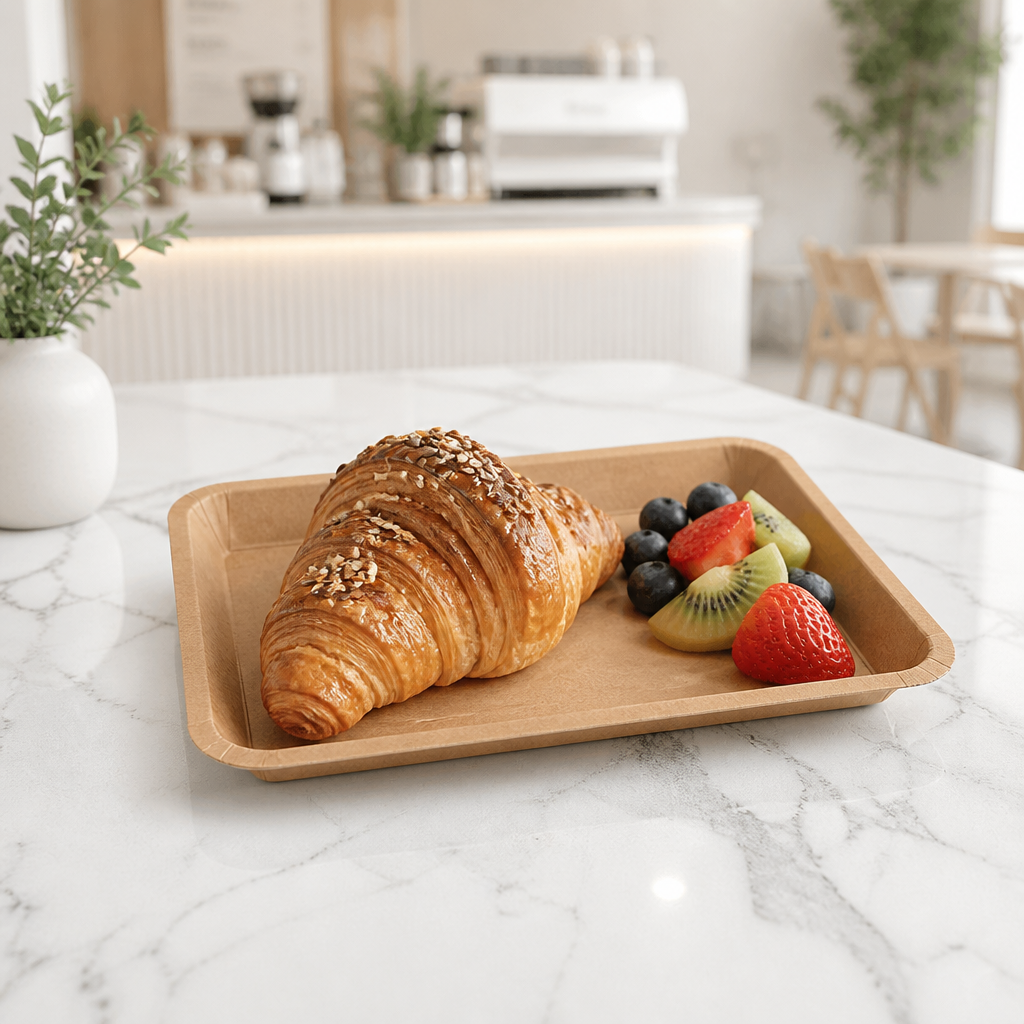
A bulk order locks in a decision for months. If the board is too light, the coating too thin or the carton cube wrong, the mistake is multiplied by every pallet in the warehouse. That is why the useful question is not which supplier quotes the lowest unit price, but which specification you can defend when the first container arrives.
This checklist covers what to write into the specification, what to verify before the deposit, and what usually goes wrong when paper trays in bulk are bought on price alone.
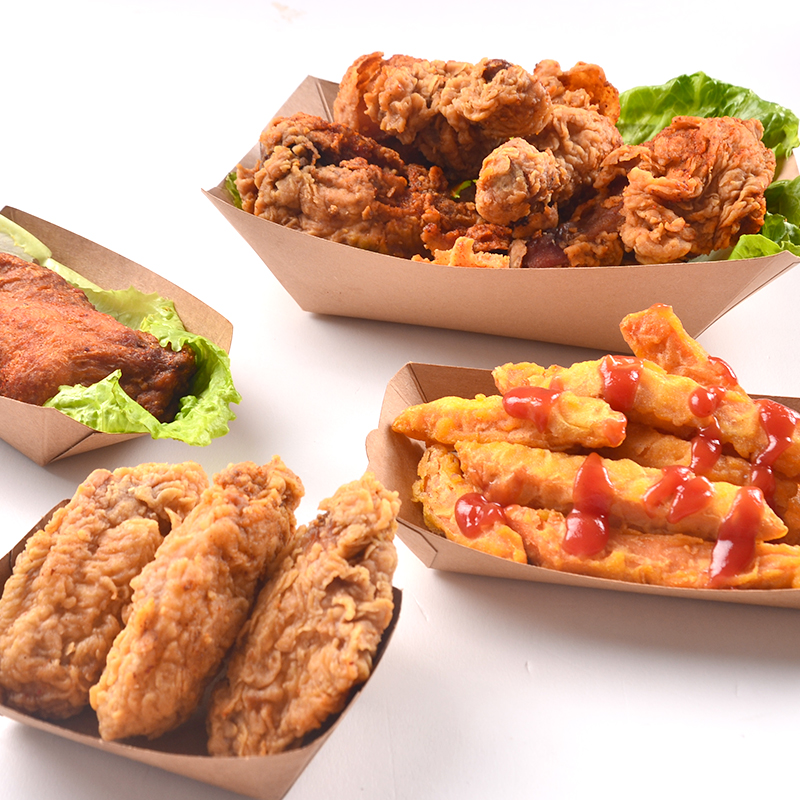
Start With the Specification, Not the Quote
Board Grade and What GSM Actually Tells You
Two paper trays can look identical and behave differently because the material behind them is different. Folded paperboard trays are usually described by GSM and coating weight; moulded pulp trays are described by part weight, wall thickness and density. Asking for a GSM figure on a moulded product produces a number that means nothing, which is often how a cheap quote wins a comparison it should lose.
For folded paper trays, GSM is a reasonable proxy for stiffness, but only alongside the coating and the flute or board structure. A heavier board with a thin barrier can still fail under a hot, oily portion, while a slightly lighter board with a proper liner holds. When you buy paper trays in bulk, ask for the board grade, the barrier weight and the finished part weight together, then test the combination.
Coating and Food Contact
The coating decides what the tray can carry and how it can be disposed of. Polyethylene gives a strong moisture barrier but usually rules out composting; water-based coatings keep the product compatible with organic waste streams while handling shorter contact times; PLA sits between the two on grease performance and disposal. None of these is universally better — the right one depends on the menu, the holding time and the waste route your customer actually has.
Food contact documentation for paper trays should match the construction being ordered, not the material family in general. Board, liner, adhesive and ink each need to be suitable for the intended use, and the report should name the SKU or at least the exact combination. A generic certificate is not evidence that the tray in the carton is compliant.
Size, Depth and Stacking for Paper Trays in Bulk
Dimensions, Fill Weight and Nesting
Buying paper trays in bulk by length and width alone is the most common cause of a disappointing order. Depth decides whether a sauced dish travels without overflowing, and the rim profile decides whether trays nest cleanly on the pass or jam halfway down the stack. Measure the fill weight of your heaviest item, not the average one, and specify the tray against that figure.
Standardising on two or three sizes reduces the number of SKUs in storage and makes reordering predictable. A mixed container of paper trays in five sizes feels flexible at quotation and becomes a warehouse problem within weeks.
Edge, Corner and Print Area
Most failures in paper trays begin at an edge. A rolled rim resists deformation better than a flat cut edge, and a glued corner holds where a folded tab spreads under load. If the tray will be printed, confirm the printable area and check the artwork on an assembled tray: curvature, fold lines and coating all change how a logo reads in the hand.
Supplier Capability
Capacity, Lead Time and Peak Season
When you order paper trays, ask what the factory can produce in a normal week and what it can produce in your busiest one. A supplier running automated forming at a daily output in the hundreds of thousands of pieces can absorb a seasonal spike; a small converter cannot, and the shortfall arrives in the month you can least afford it. When buying paper trays in bulk, confirm the lead time for a repeat order separately from the first order, because the second is the one that has to be routine.
Paper trays in bulk also depend on material availability. Board shortages or a coating supply issue can delay a shipment that was quoted at four weeks. Ask how the supplier handles a raw material gap and whether they hold buffer stock for regular customers.
Certificates, Audit and Batch Traceability
Certification is only useful when it maps to the product. Food safety systems such as ISO 9001 and BRC, food contact reports and compostability certification each answer a different question, and a supplier that can explain which document covers which SKU is easier to audit than one that sends a folder of logos. Ask your paper trays supplier for the certificate scope and the expiry date, not just the badge.
Traceability in paper trays matters when something goes wrong. Batch marking on the carton, production dates and inspection records let a supplier isolate a problem instead of recalling an entire season of stock.
Landed Cost, Not Unit Price
Freight, Cube and Trade Terms
Paper trays in bulk are light and bulky, so freight is decided by volume rather than weight. A carton that is 15 mm taller than necessary can cost more across a container than a small discount on the piece price saves. Ask for carton dimensions, units per carton and container loading quantity before comparing quotes, and confirm whether the price is ex-works, FOB or delivered.
Payment terms belong in the same comparison: a long deposit cycle and a 30-day production window can cost more in working capital than a slightly higher price with stock available in three days.
| RFQ line item | Why it changes the outcome |
|---|---|
| Board grade, barrier and part weight | Defines load capacity and grease performance |
| Fill weight and holding time | Sets the test condition, not the drawing |
| Carton cube and units per carton | Drives freight and warehouse space |
| Repeat lead time | Decides whether the programme is stable |
Storage and Rotation After Buying Paper Trays in Bulk
Humidity, Stack Height and FIFO
Paper takes moisture from the air and loses strength as it does, so buying paper trays in bulk is also a storage commitment. Cartons on a concrete floor, beside a loading door or in an unventilated room will absorb humidity and produce soft trays that passed inspection at the factory. Pallets, wrap and a controlled space protect the investment more cheaply than any upgrade to the tray itself.
Stack height should respect the compression strength of the carton, not the height of the racking. Run first-in-first-out and mark production dates, because coated stock ages: a tray that has sat for a year is not the tray that was approved.
FAQ
What quantity counts as a bulk order for paper trays?
It depends on the supplier and the construction, so ask for the tier table rather than assuming a number. Custom-printed paper trays carry a higher setup than plain stock, while moulded formats are driven by mould availability. The practical threshold is the quantity at which your storage and cash flow still work.
How long can paper trays be stored before quality drops?
Dry, uncoated stock keeps far longer than coated stock, and humidity shortens both. Rather than rely on a shelf-life claim, specify storage conditions and ask the supplier to state a recommended use window for the exact construction, then test a carton from the oldest pallet before reordering.
Which certificates should a paper tray supplier provide?
At minimum, a food contact report covering the exact materials and a quality management certificate such as ISO 9001 or BRC. If a compostability claim will appear on the packaging, request the certification that applies in your market. Confirm scope and validity, and keep copies with the SKU file.
How do I compare quotes from different suppliers?
Convert every quote to a landed cost per tray: piece price, freight, duty, carton cube, storage and the working capital tied up in lead time. Suppliers that quote different specifications cannot be compared on price at all, which is why the specification has to be fixed before the RFQ goes out.
Buying paper trays in bulk rewards the buyer who arrives with a written specification. When paper trays in bulk are compared on identical board, barrier, dimensions and carton, the cheapest quote is finally the cheapest product — and the programme stops depending on luck.