 EN
EN

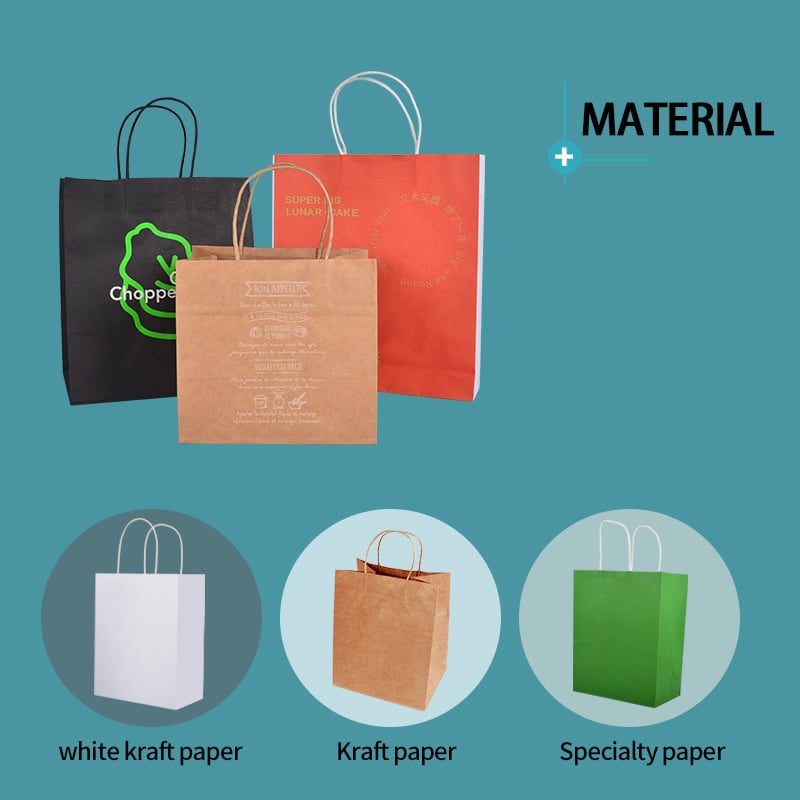
Two quotes for the same paper bag can differ by a wide margin, and the difference is almost never the supplier's margin. It is the board grade, the number of plies, the handle attachment, the print coverage and the finishing — five decisions that move cost and performance together. Buyers who cannot read those five variables end up comparing prices for products that are not the same product.
This guide breaks down what actually drives the unit price and the load-bearing behaviour of a paper bag, and where a cheaper specification will show up later as a failure at the till.
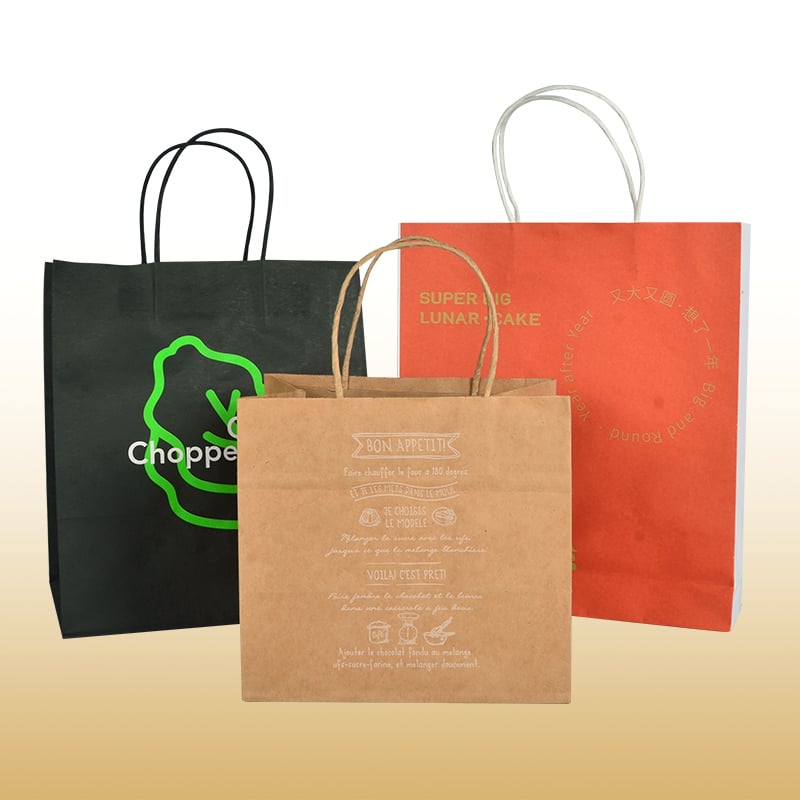
Material: the First Cost Driver for a Paper Bag
Kraft, Recycled and the Trade-Offs
Kraft pulp keeps longer fibres, which is why a kraft sheet tears less readily and holds a crease without cracking. That matters on a bag that is folded flat, opened, filled and carried. Recycled sheets cost less but shorten the fibre, so the same weight feels softer and loses stiffness at the gusset, which is exactly where a bag begins to fail.
The surface differs too. Virgin kraft prints with more consistent colour and fewer visible flecks, so a brand-critical design needs less ink to look clean.
Basis Weight and What It Buys
Basis weight is the most direct lever on both the price and the strength of a paper bag. A heavier sheet uses more fibre per unit, costs more to buy and to freight, and resists puncture and sag better. A lighter sheet is cheaper and adequate for light retail goods, but it transmits load to the handle and the base faster, which is why a cheap paper bag often feels fine empty and weak when full.
Weight should be specified against the intended load and the way the bag is carried, not against a generic standard.
Construction: Where Strength Is Decided
Single Ply or Multi-Ply
Multi-ply construction for a paper bag bonds several sheets together and is used where the contents are heavy, abrasive or powdered. Each additional ply adds material and machine time, so the cost rises faster than the ply count suggests. For retail and food service, a single ply of well-chosen kraft is usually sufficient and keeps the bag light and printable.
The decision for a paper bag should follow the product, not the price list. A bag that carries a boxed item needs stiffness; a bag that carries loose produce needs moisture tolerance; a bag that carries a bottle needs a reinforced base.
Gusset, Base and Handle
Side gussets in a paper bag create volume and let it stand, while a square or satchel base distributes load across the full footprint. Both require more die-cutting precision than a flat pouch, and that precision is a real cost. It is also the difference between a paper bag that stands on a counter and one that folds over and spills.
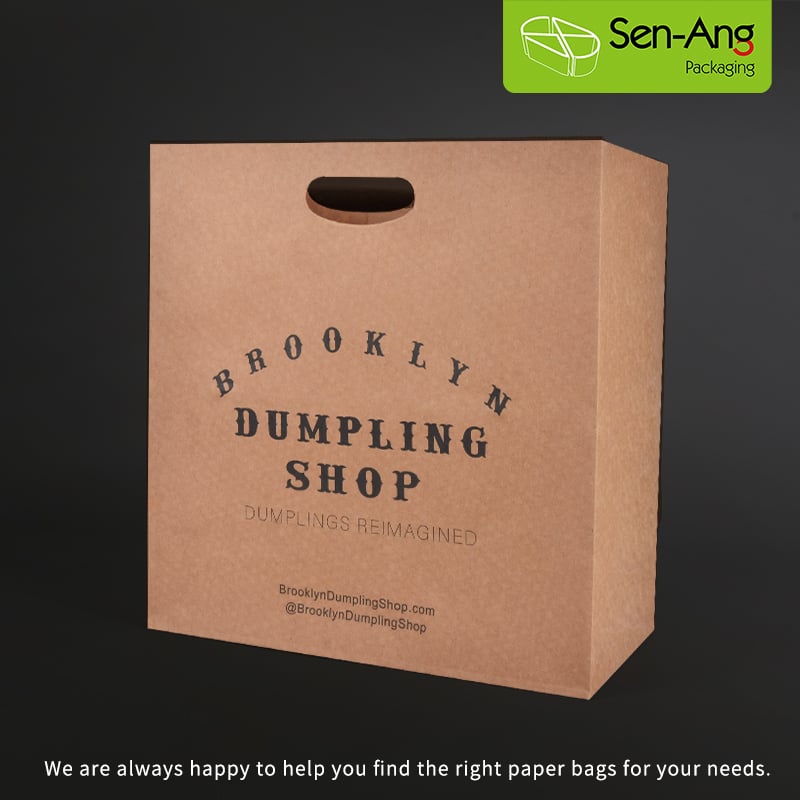
The handle is the weakest point of a paper bag in almost every failure. Twisted paper handles are economical and suit mid-market retail; flat ribbon and cotton cord read as premium and suit gifting; die-cut handles are the cheapest and the most limited, because the load hangs on a cut edge of the bag body.
A reinforced patch or an extra fold at the handle junction costs little and changes the load rating more than any other single upgrade. Buyers who specify a strong board but a cheap handle have optimised the wrong component.
Print and Finish
Method, Colour Count and Coverage
For a paper bag, flexo printing is efficient for large runs with simple colour sets; offset holds finer detail and more accurate brand colour; digital suits short runs and versioning but carries a higher cost per unit. The method should be chosen from the artwork and the volume together, not from habit.
Coverage is the hidden cost variable in a paper bag. A full-bleed design across every panel uses more ink and demands tighter registration than a single-colour mark on one face, and on kraft the ink sits differently than on a coated sheet. A two-colour design built around the kraft tone often looks more expensive than four colours fighting the substrate.
Lamination, Varnish and Foil
Matte or gloss lamination on a paper bag improves scuff resistance and colour depth but adds a plastic film that can take the bag out of the paper recycling stream. Water-based coatings give some protection without that penalty, which is why they are increasingly specified for retail programmes with a published sustainability claim.
Foil stamping, embossing and spot UV sit at the top of the cost curve, with tooling charged once and unit cost added per run. They earn their place when the bag is part of the product experience.
Cost Drivers Outside the Bag
Volume, MOQ and Lead Time
Setup, plate-making and machine changeover for a paper bag are fixed costs spread across the run, so the unit price falls as quantity rises. Custom sizes and bespoke finishes raise the minimum quantity a factory can accept economically; stock sizes with light customisation do not. That is why a small brand often gets better value from a standard format with a printed band than from a fully bespoke paper bag.
Lead time is a cost line for a paper bag as well. Rush orders displace other jobs and attract overtime, while a predictable forecast lets a factory schedule at standard rates.
Freight, Cube and Damage
Paper bags are light and bulky, so freight follows volume rather than weight. Flat-packing and carton dimensions decide how many units fit in a container, and a small increase in carton height can cost more across a shipment than a discount on the piece price. Damage is the other hidden cost: a crushed carton produces creased bags that cannot be sold at full price.
| Cost lever | Effect on unit cost | Effect on performance |
|---|---|---|
| Heavier basis weight | Higher material and freight | More stiffness and puncture resistance |
| Virgin kraft instead of recycled | Higher sheet price | Stronger gusset, cleaner print surface |
| Reinforced handle patch | Small increase | Largest gain in load rating |
| Full-bleed print | More ink and registration control | Brand impact, no structural gain |
| Plastic lamination | Film plus lamination step | Scuff and moisture resistance; recyclability lost |
Sustainability and Its Price
Certification and Claims
Certified fibre for a paper bag costs more than uncertified, and the premium is only worth paying if the claim will actually be used. A chain logo on a recycled sheet is not a sustainability credential; a chain-of-custody certificate that names the material is. Buyers should also check that the ink, adhesive and any window film match the claim, because a plastic window quietly disqualifies most recycling messages.
Inks and Adhesives
Water-based and soy-based inks reduce solvent emissions and are easier to de-ink, while starch-based adhesives keep a paper bag compatible with organic waste streams. Both add a small premium, and both are worth specifying at the design stage rather than retrofitting after the artwork is approved.
FAQ
What matters most for paper bag strength?
Basis weight and fibre quality set the ceiling, but the handle attachment and the base construction decide whether the bag reaches that ceiling. Most failures happen at the handle junction or the gusset, so those two details deserve as much attention as the sheet.
How does printing change the price?
Through colour count, coverage and method. Flexo on a large run is the cheapest path; offset buys accuracy; digital buys flexibility. Full coverage across every panel costs more in ink and in registration control than a single-colour mark.
Is a paper bag a sustainable choice?
It can be, when the fibre is certified, the coating is water-based and the handle and window are paper. A laminated bag with a plastic window is not recyclable in most systems, so the claim should follow the specification rather than the material name.
What quantity does a custom paper bag require?
It varies with size, print and finishing, because setup is charged once per run. Brands with low volumes should start from a stock format with light customisation, then move to a bespoke size once the annual quantity justifies the tooling.
Cost and performance in a paper bag come from the same five decisions: sheet, ply, construction, print and finish. Fix those in writing before the quotes arrive, and the cheapest offer is finally comparable with the most expensive one.