 EN
EN

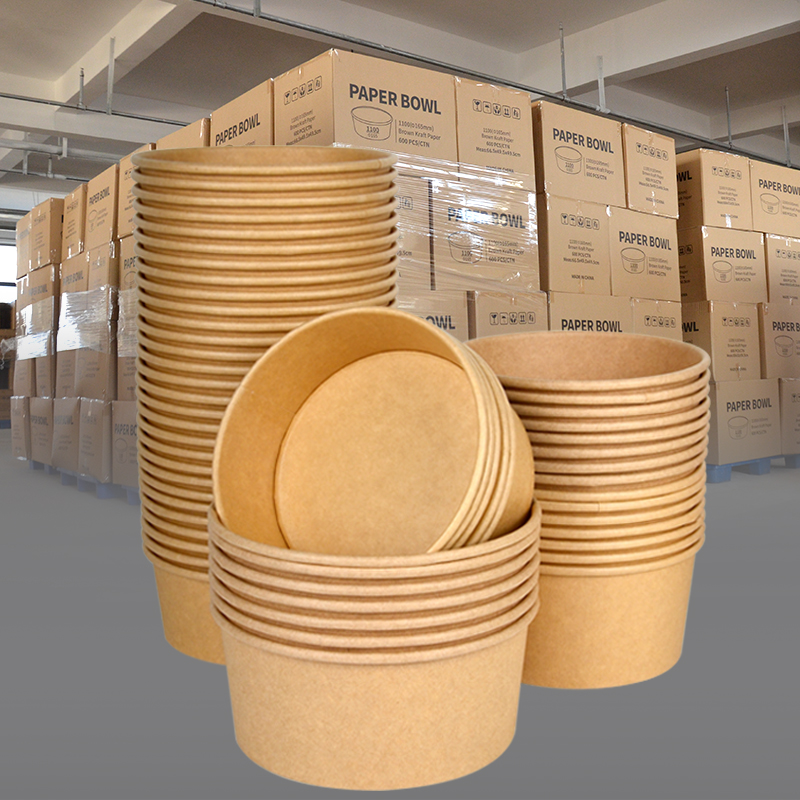
A distributor buying paper bowls in bulk is not buying a bowl; it is buying a specification it will have to defend to a customer six months later. The questions that matter are the ones that decide whether the third delivery matches the first: board grade, lining, lid fit, carton cube and whether the factory can hold your allocation in a busy month.
This guide sets out those checks in the order a buyer should run them, and the answers that should make a supplier nervous.
Start With the Paper Bowls Specification
Board, Stiffness and Fill Weight
Paper bowls are specified by board grade and finished part weight, not by a generic "premium" label. Stiffness is what the customer feels and what keeps a loaded bowl from bowing at the rim, and it comes from board weight and fibre quality together.
Specify paper bowls against the heaviest fill they will carry, not the average. A bowl that handles a side salad and fails on a stew is a bowl that generates returns, and returns cost more than the unit-price difference between grades.
The Lining Decides Everything Downstream
Almost every foodservice paper bowl carries a barrier, and that barrier fixes both performance and what you can tell your customers. Polyethylene gives the strongest moisture hold and rules out composting in most systems. Water-based coatings keep the bowl compatible with organic waste where a facility accepts food-soiled packaging and disperse at the pulper. PLA sits between the two and will not break down at home.
A distributor who cannot name the lining for each SKU will eventually quote a compostability claim for a PE-lined bowl. That mistake is made in the sales office and paid for by the distributor.
Size and Range of Paper Bowls
The Size Ladder and SKU Count
Ask for the full size ladder of paper bowls, not the three sizes the factory promotes. A range that covers small sides, a standard portion and a sharing format lets you serve restaurants, caterers and delivery kitchens from one supplier; a narrow range forces you to split the account.
Lids belong in the same conversation. Every size you stock needs a matching lid in the same specification, or the end customer receives a bowl that leaks at the rim and blames the distributor.
Print and Minimums
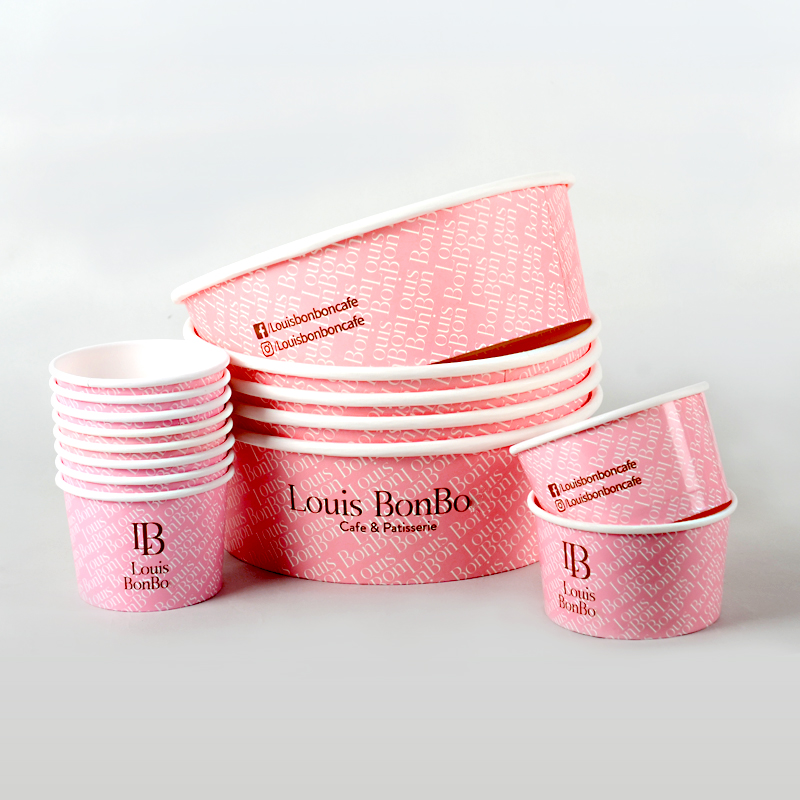
Print is where a distributor of paper bowls adds margin. Four-colour print, hot stamping and spot UV all work on board, and setup is charged per run rather than per bowl, so a larger order with several artworks is cheaper per unit than several small ones.
Ask for the minimum quantity at your actual size and artwork. Custom paper bowls carry a different minimum from stock, and a distributor who confuses the two will misprice the first order.
Supplier Capability for Paper Bowls
Factory or Trader
Ask who forms the paper bowls. A trader can quote quickly, but it cannot adjust a mould, change a wall thickness or protect your allocation when demand spikes. For a programme that will run for years, the ability to change something is worth a small premium.
Capacity and Repeat Lead Time
Ask for the repeat-order lead time separately from the first order, then ask what allocation looks like in the busiest week. A factory running a dozen bowl moulding machines at a daily output in the hundreds of thousands of pieces can absorb a spike; a small converter cannot, and the shortfall arrives in your customer's peak season.
Capacity on paper bowls is meaningless without batch traceability. Carton marking that links to production records is what lets a supplier isolate a defect instead of recalling a season of stock.
Documentation for Paper Bowls
Certificates Mapped to SKUs
For paper bowls, ask for a food contact report naming the board, coating and ink; a fibre certificate naming the mill; and, where a compostability claim will be made, certification covering the finished bowl in the destination market. A supplier who can map each document to a SKU is easy to sell for; one who sends a folder of logos leaves the distributor exposed.
Claims and Their Risk
Compostable, recyclable and plastic-free are three different claims with three different proofs. A bowl may be repulpable yet almost never collected clean; a compostable bowl needs a facility that accepts food-soiled packaging. The distributor carries the reputational risk on any claim printed on a bowl it supplied.
Paper Bowls: Margin and Terms
Landed Cost and Carton Cube
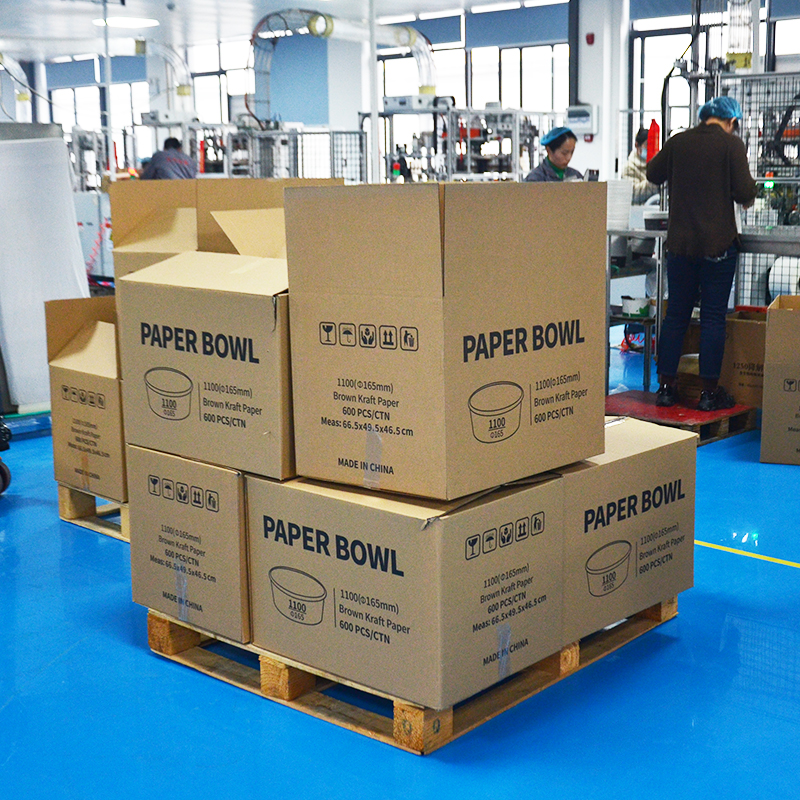
Paper bowls are bulky, so freight follows volume. Carton dimensions decide how many units fit in a container, and a taller carton can cost more across a shipment than a discount on the unit price saves. Ask for units per carton and cartons per pallet for every size you intend to stock.
Add the damage rate on paper bowls to the calculation. A crushed carton produces creased bowls that cannot be sold at full price, and that cost lands on the distributor rather than the factory.
Payment, Exclusivity and Change Control
Payment terms belong in the same comparison as price: a long deposit cycle ties up working capital that a slightly higher price with faster stock does not. If you intend to build a private-label range, agree artwork ownership and exclusivity in writing before the first run, and put specification changes through a documented approval so both sides are signing off the same product.
| Check | What a good answer looks like |
|---|---|
| Forms the bowl in-house | Can change mould and wall thickness |
| Lining per SKU | Named coating with a test result |
| Size ladder and lids | Every size paired with its lid |
| Repeat lead time | Quoted separately from the first order |
| Traceability | Carton marking linked to batch records |
FAQ
How do I choose the right board weight for paper bowls?
From the fill weight and the holding time, not from a catalogue. Hot, wet dishes need a heavier board and a sealed base; a dry side needs much less. Test a filled bowl at service temperature before committing a container.
Which certifications should a distributor prioritise?
The food contact report first, then a fibre certificate, then compostability certification that names the finished bowl. Match each to the market you are selling into rather than collecting logos.
How do I reduce inventory risk across sizes?
Concentrate stock on the two or three sizes that cover most orders, and treat the rest as order-to-order. A long tail of sizes costs more in storage and obsolescence than it earns in margin.
What should incoming inspection cover?
Rim diameter and stack height, a filled leak test, print registration against the approved sample, and carton condition. Sample from the bottom of the pallet as well as the top.
Sourcing paper bowls in bulk comes down to five answers: who forms the bowl, what it is lined with, which sizes have lids, how long a repeat takes, and what the carton cube is. Get those in writing and the rest of the negotiation is arithmetic.