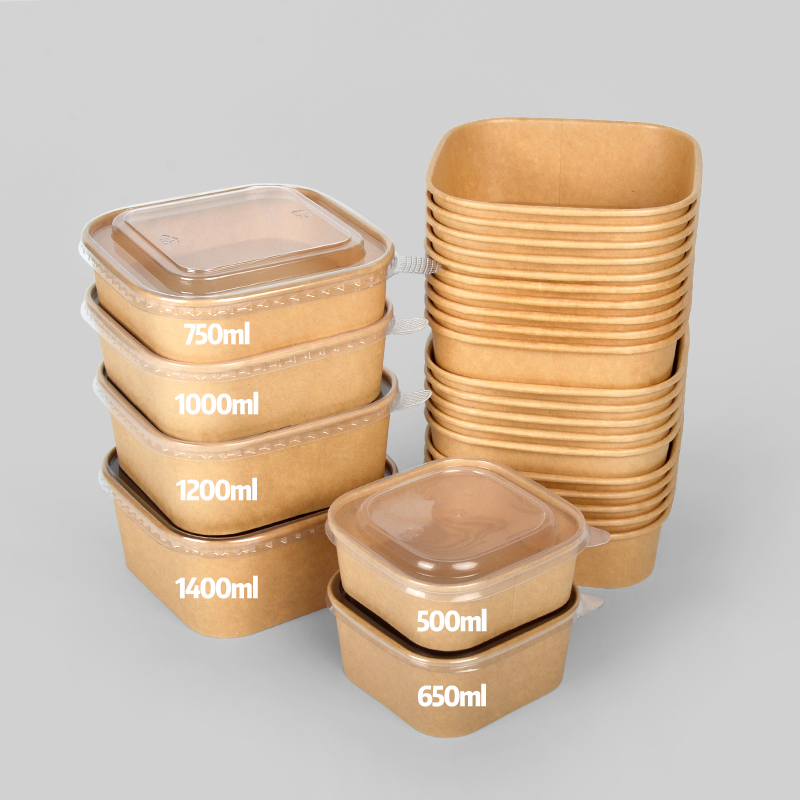
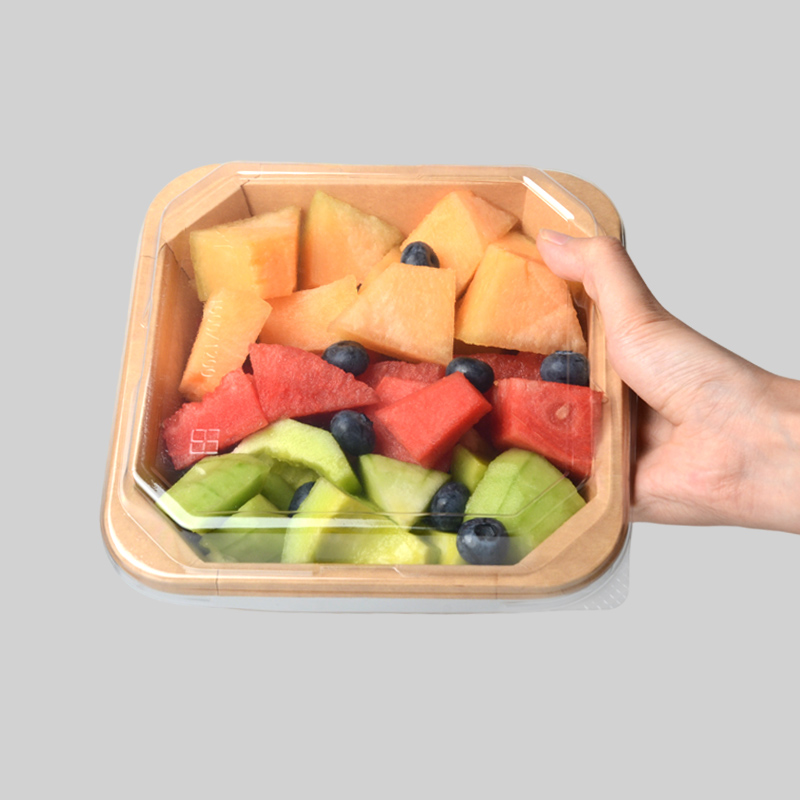
In the world of food service and packaging design, the choice between square bowls and traditional round containers represents a fundamental decision that impacts functionality, aesthetics, and operational efficiency. While round bowls have dominated the market for decades, square bowls are increasingly recognized for their superior design advantages across various applications. From optimized storage solutions to enhanced visual presentation, these geometric alternatives offer compelling benefits that forward-thinking businesses are beginning to embrace. The shift toward angular bowl designs reflects broader trends in packaging innovation, where form and function must work in perfect harmony to meet evolving consumer expectations and operational demands.
Space Efficiency and Storage Optimization
Maximized Storage Density
The geometric properties of square bowls create inherent advantages in storage optimization that round containers simply cannot match. When square bowls are arranged in shipping containers, storage facilities, or retail displays, they eliminate the wasted space that occurs between curved surfaces. This tessellation effect allows for up to 30% more units to be stored in the same footprint compared to round alternatives. The mathematical principle behind this advantage lies in how square shapes can be arranged without gaps, creating a seamless grid pattern that maximizes every available inch of storage space.
Commercial kitchens and food service operations particularly benefit from this space efficiency. Restaurant storage areas, which are typically at a premium, can accommodate significantly more inventory when utilizing square bowl designs. The stackability factor also comes into play, as square bowls create more stable towers due to their flat edges and corners, reducing the risk of toppling that can occur with rounded containers. This stability translates directly into safer storage practices and reduced product loss.
Transport and Logistics Benefits
Transportation costs in the food service industry are increasingly scrutinized as businesses seek to optimize their supply chain efficiency. Square bowls deliver measurable advantages in shipping and logistics operations by maximizing trailer and container utilization. The ability to pack more units per shipment reduces transportation costs per unit and minimizes the environmental impact associated with freight movement. Distribution centers report improved handling efficiency when working with square bowl inventories, as the consistent geometry facilitates automated sorting and packaging processes.
The reduced shipping volume requirements for square bowls also contribute to lower carbon footprints for environmentally conscious businesses. When companies can ship 25-30% more units in the same truck load, they effectively reduce their per-unit transportation emissions. This efficiency gain becomes particularly significant for businesses operating large-scale distribution networks or those committed to sustainability initiatives.

Enhanced Functionality and User Experience
Improved Food Presentation
The presentation advantages of square bowls extend far beyond mere aesthetics, influencing consumer perception and satisfaction in meaningful ways. The flat surfaces and defined corners of square bowls create natural boundaries that help organize food components visually. This geometric structure allows for more intentional plating and presentation, enabling chefs and food service professionals to create visually appealing arrangements that would be challenging to achieve with round containers. The angular design provides clear zones for different food elements, supporting portion control and creating a more professional appearance.
Photography and marketing benefits also emerge from the use of square bowls, as the clean lines and geometric precision translate exceptionally well in visual media. Food delivery services and social media marketing campaigns often showcase meals more effectively when presented in square containers, as the structured appearance conveys quality and attention to detail. The consistency of square bowl shapes also creates a cohesive brand image when multiple products are displayed together, contributing to overall brand recognition and professional presentation standards.
Practical Handling Advantages
From a user experience perspective, square bowls offer several practical advantages that enhance functionality during everyday use. The flat edges provide natural grip points that make handling easier and more secure, particularly important in commercial food service environments where speed and efficiency are paramount. Kitchen staff report improved handling confidence when working with square bowls, as the defined corners and edges provide tactile feedback that helps prevent accidental drops or spills.
The corner design of square bowls also facilitates more effective mixing and serving processes. When preparing sauces, dressings, or other liquid components, the corners of square bowls create natural collection points that make it easier to scrape and portion ingredients completely. This functional advantage reduces waste and improves portion consistency, two critical factors in commercial food operations where profit margins depend on precise ingredient usage.
Manufacturing and Cost Considerations
Production Efficiency Advantages
Manufacturing processes for square bowls often demonstrate superior efficiency compared to round container production, particularly in thermoforming and injection molding applications. The geometric simplicity of square designs reduces the complexity of mold construction and maintenance, leading to lower tooling costs and faster production cycles. Manufacturing facilities report fewer quality control issues with square bowl production, as the consistent angles and flat surfaces are easier to inspect and measure for dimensional accuracy.
Material utilization rates also improve with square bowl manufacturing, as the cutting and forming processes generate less waste compared to round container production. The efficiency gains in raw material usage contribute to overall cost reduction and support sustainability initiatives by minimizing manufacturing waste streams. These production advantages often translate into competitive pricing that makes square bowls an attractive option for cost-conscious businesses.
Quality Control and Consistency
Quality assurance processes benefit significantly from the geometric predictability of square bowls. Automated inspection systems can more easily verify dimensional accuracy and structural integrity when dealing with consistent angular shapes rather than curved surfaces that require more complex measurement protocols. This reliability in quality control translates into reduced rejection rates and more consistent product delivery to end users.
The durability characteristics of square bowls often exceed those of round alternatives due to the structural reinforcement provided by corner geometry. The distribution of stress forces across flat surfaces and defined edges creates stronger containers that resist deformation and cracking under normal use conditions. This enhanced durability reduces replacement costs and improves customer satisfaction through consistent product performance.

Environmental and Sustainability Impact
Material Efficiency and Waste Reduction
Environmental considerations increasingly influence packaging decisions across all industries, and square bowls offer several sustainability advantages that align with corporate environmental responsibility goals. The manufacturing efficiency of square bowls typically results in lower material consumption per unit, directly reducing the environmental footprint associated with raw material extraction and processing. The improved stackability and storage density also contribute to reduced packaging requirements for shipping protection, further minimizing material usage throughout the supply chain.
End-of-life considerations also favor square bowl designs in many recycling applications. The consistent geometry facilitates automated sorting processes at recycling facilities, improving the efficiency of material recovery operations. The reduced volume requirements for storage and transport of used containers also support more efficient collection and processing systems, contributing to overall recycling program effectiveness.
Circular Economy Integration
The compatibility of square bowls with circular economy principles extends beyond basic recyclability to include reuse and repurposing opportunities. The functional advantages that make square bowls attractive for food service applications also make them valuable for secondary uses in storage, organization, and other applications. This extended useful life cycle reduces the overall environmental impact per unit and supports sustainable business practices.
Companies implementing comprehensive sustainability programs often find that square bowls align better with their environmental objectives due to the cumulative benefits across manufacturing, distribution, use, and disposal phases. The measurable improvements in efficiency and resource utilization contribute to verifiable environmental impact reductions that support corporate sustainability reporting and certification programs.
Market Trends and Industry Adoption
Growing Commercial Acceptance
Industry adoption of square bowls continues to accelerate as businesses recognize the tangible benefits across multiple operational areas. Food service chains, catering companies, and institutional food providers increasingly specify square bowl designs for new product launches and existing line extensions. The competitive advantages in storage, transport, and presentation create compelling value propositions that drive adoption decisions even when initial costs may be slightly higher than traditional alternatives.
Market research indicates that consumer acceptance of square bowls has grown significantly as familiarity with the format increases. The professional appearance and practical benefits translate into positive consumer experiences that support continued market growth. Retail applications are also expanding as grocery stores and food retailers recognize the merchandising advantages of square bowl formats in display and inventory management.
Innovation and Future Development
Ongoing innovation in square bowl design continues to expand the advantages over traditional round formats. Advanced manufacturing techniques enable new features and capabilities that enhance functionality while maintaining the core geometric benefits. Smart packaging integration, temperature management systems, and specialty coating technologies are being developed specifically for square bowl applications, creating additional value propositions for specific market segments.
The future trajectory of square bowls appears strongly positive as supply chain efficiency becomes increasingly important to business success. The combination of operational advantages, environmental benefits, and consumer acceptance creates a foundation for continued growth and innovation in this product category. Industry experts predict that square bowl adoption will continue to expand across new market segments as awareness of the benefits increases.
FAQ
Are square bowls more expensive than round bowls
While initial unit costs for square bowls may be slightly higher in some cases, the total cost of ownership often favors square designs due to improved storage efficiency, reduced transportation costs, and lower handling expenses. The space savings in storage and shipping typically offset any premium in purchase price, making square bowls cost-effective over the complete product lifecycle.
Do square bowls work well for all types of food
Square bowls are versatile containers suitable for most food applications, including soups, salads, entrees, and sides. The corner design actually provides advantages for certain foods by creating natural zones for different ingredients and facilitating more complete mixing or serving. However, some specific applications may still benefit from round designs, particularly for foods that require swirling motions during preparation.
How do square bowls impact food safety and hygiene
Square bowls generally support good food safety practices through improved handling stability and easier cleaning processes. The flat surfaces and defined corners can be cleaned more thoroughly than curved surfaces in some cases, though proper sanitation procedures remain essential regardless of container shape. The improved handling characteristics also reduce the risk of accidents and spills that could create food safety concerns.
Can existing equipment and systems accommodate square bowls
Most existing food service equipment and systems can accommodate square bowls with minimal or no modifications required. Storage systems, refrigeration units, and serving equipment typically work well with square formats, though some specialized equipment designed specifically for round containers may require adjustments. The growing popularity of square bowls has led many equipment manufacturers to design systems that work optimally with both round and square formats.